

In 1909, the United States was suffering a shortage of meat. At the same time, Louisiana’s waterways were being choked by invasive water hyacinth. The solution seemed to be simple, the American Hippo Bill. Hippos could be imported to the United States to eat the water hyacinth and people can eat the hippos.
The bill did not pass as hippos are ill-tempered apex predators and not cooperative for ranching. However, the idea was not completely ridiculous.
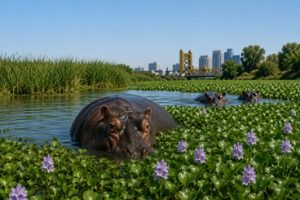 In 2015, hippopotamuses from Botswana were used in the Sacramento-San Joaquin Delta as a biological control of water hyacinth. Researchers also used Florida manatees and giant guinea pig-like rodents from Brazil called capybaras to control the invasive aquatic plants.
In their native habitat, hippos mainly eat aquatic plants, including hyacinth, which they devour at a rate of 200 to 300 pounds a day. Special measures needed to be taken to keep onlookers at bay as the ill-tempered hippos are highly territorial and would likely attack people who encroach on their turf.