
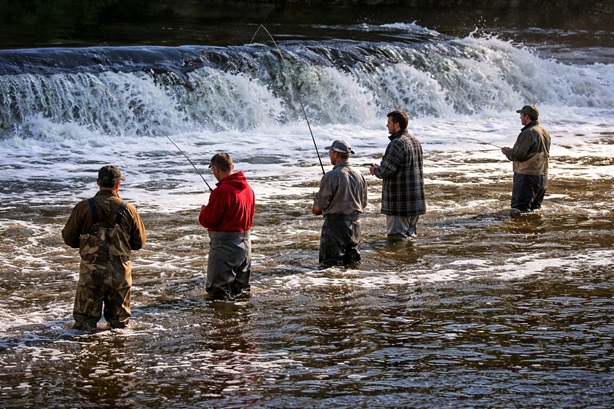
Each fall, elementary school students gather along the Milwaukee River to release fingerling lake sturgeon—an act that symbolizes just how far the river has come. Once written off as polluted and lifeless, the Milwaukee River now supports more than 30 native fish species and has become a model of urban river recovery.
Decades of environmental regulations, dam removals, and more than $5 billion in water quality and infrastructure improvements—including wastewater treatment upgrades, phosphorus reductions, and the Deep Tunnel system—have transformed the river into a cleaner, healthier, and more economically valuable resource. From cold-water trout streams near its headwaters to paddling, fishing, and wildlife habitat through downtown Milwaukee, the river tells a powerful story of restoration.
Yet challenges remain. Water quality varies across the watershed, development pressures persist, and the ultimate test—whether lake sturgeon can once again reproduce naturally—has yet to be answered.