
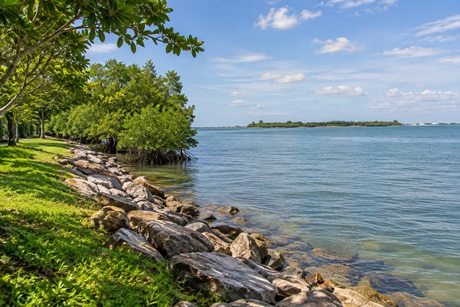
With limited land available for traditional waste disposal, Singapore developed an unusual solution: an offshore landfill built in the sea. Semakau Landfill, which opened in 1999, receives ash and non-incinerable waste after most of the country’s solid waste is processed at waste-to-energy plants. Incineration reduces the volume of the waste by as much as 90 percent before the remaining material is transported to the landfill.
Semakau was created by enclosing approximately 350 hectares (about 865 acres) of sea with a seven-kilometer, or roughly 4.3-mile, rock barrier. An impermeable membrane and marine clay help contain the landfill and prevent contaminated water from entering the surrounding sea. Waste is deposited within engineered cells inside the enclosed area.
What makes Semakau especially interesting is the effort to protect and restore the surrounding marine environment. Mangroves disturbed during construction were replanted, while nearby coral reefs, seagrass beds and remaining mangrove habitat were protected. Today, the area supports marine life and migratory birds and is even used for guided nature walks, birdwatching and other recreational activities.
The project isn’t a permanent answer to Singapore’s waste problem. Semakau continues to fill, and the country is exploring ways to reuse incineration ash rather than sending it to the landfill. Still, the project provides an interesting example of how engineering, waste management and environmental protection can be incorporated into the same project when available land is extremely limited.