

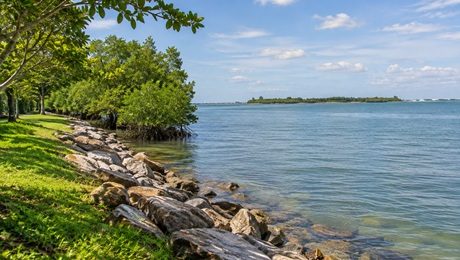
With limited land available for traditional waste disposal, Singapore developed an unusual solution: an offshore landfill built in the sea. Semakau Landfill, which opened in 1999, receives ash and non-incinerable waste after most of the country’s solid waste is processed at waste-to-energy plants. Incineration reduces the volume of the waste by as much as 90
Summer Waterways and Signs of Recovery A Message from Our Leader: Thermodynamics and Biology Summer Brings Recreation and Harmful Algal Blooms Native Plants Return as Lagoon Recovers Ross River Harvester Continues to Deliver Results Upcoming Conferences Aquatic Plant Management Society 66th Annual Conference Indiana Water Summit 9th Annual Summit Read More

Overwhelmed by decades of pollution, by the late 60’s, the Buffalo River’s condition was disgraceful. Both Lyndon Johnson and Robert Kennedy visited the New York river to inspect the carnage, and the death knell for this once proud waterway was sounding. Jill Jedlicka is Executive Director Of Buffalo Niagara Riverkeeper. The river hit rock bottom

Pete McGeshick II, 80, a Sokaogon Chippewa tribal member and former Rice Chief, recalls when he and Sokaogon Chippewa tribal members used to harvest wild rice on Spur Lake. The wild rice is all but gone, but DNR ecologists are working to clear Twin Lakes Creek, hoping to revive wild rice on Spur Lake. The

Seagrass meadows are widespread in shallow coastal waters and are involved in trapping and binding sediment particles that form the seabed. These seagrass meadows also provide important ecosystem services and benefits, such as water quality improvement; CO2 absorption; climate change mitigation; sediment production for seafloor and beach stabilization; coastal protection; nursery and refuge areas for
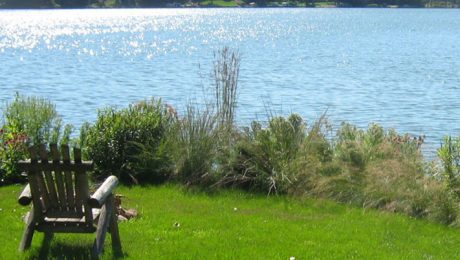
High water levels leading to eroding shorelines have been front-page news in recent months. Shoreline erosion is a concern for property owners with homes located on a Great Lakes or an inland lake. While we can’t control how Mother Nature effects our water levels there are steps that property owners can do to minimize shoreline


Florida’s tropical waters are home to a great diversity of life, but perhaps the most endearing is the Manatee. The manatee is a grazing animal and spends between six and eight hours a day feeding on seagrasses and other freshwater vegetation. The manatee actually plays an important role in controlling the aquatic plant growth in