
(262) 392-2162 | info@aquarius-systems.com
  • Contact Us
  • Resources
  • Careers

Aquarius-Systems

  • Home
  • Equipment
    Weed Harvesters
    Aquatic Excavators
    Canal Cleaners
    Vegetation Shredders
    Trash Skimmers
    Transport Barges
    Trailers
    Offloading Conveyors
  • Service
    Parts & Service
    Equipment Manuals
    Safety Guide
  • About Us
  • Media
  • Latest
  • Quote

Mechanical Harvesting Removes Water Chestnut on the Charles River

  • 0
/ Published in Aquatic Plant Management, Water Quality & Pollution
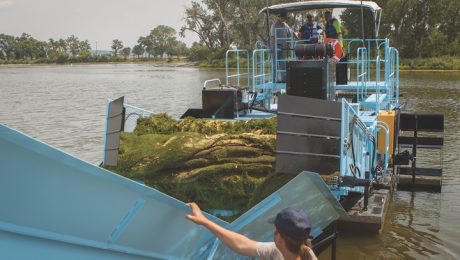
Water chestnut forms dense floating mats which crowds out native vegetation.
The Charles River Watershed Association and local citizens have obtained funding to conduct large-scale mechanical harvesting to remove roughly 50 acres of water chestnut and other invasive weeds. The Charles River Lakes District in Massachusetts is a popular destination for canoeists, kayakers and rowers, but the pollution from stormwater runoff resulted in an increase in
aquatic invasive speciesaquatic plant managementeurasian milfoillake managementmechanical harvestingnutrient levelsrecreational boatingstormwater runoffwater chestnutweed harvesting

HM-1020 Harvester Removes 16,000 Pounds of Weeds in 20 Minutes at Carter Lake

  • 0
/ Published in Aquatic Plant Management
Weed Harvester Unloading into Shore Conveyor
Carter Lake is an old oxbow lake of the Missouri River and is now an urban lake shared by two different cities (Omaha, Nebraska and Carter Lake, Iowa), in two counties (Douglas and Pottawattamie) and two states (Nebraska and Iowa). A vital part of the area’s watershed, Carter Lake is a natural catch basin for
aquatic plant harvestingaquatic vegetationCarter LakeHM-1020Iowalake managementmechanical harvestingNebraskanutrient levelsstormwater runoffvegetation removalwater qualityweed harvesting

Nutrient Pollution Drives Nitrate Problems in Decatur Drinking Water Source

  • 0
/ Published in Lake & Waterway Management, Water Quality & Pollution
Phosphorus is an essential nutrient for plant growth.
Surrounded by some of the world’s richest soil and home to two major grain processing plants, Decatur has long been a hub for agribusiness in the United States. One major trade-off comes in the form of excess nutrients, specifically nitrogen and phosphorus, that runoff from fertilizers used on local farm fields and from discharges from
agricultural runoffdrinking waterlake managementnitrate reductionnitratesnitrogennutrient pollutionphosphorusstormwater runoffwastewater dischargewater contaminantswater quality

Kitsap Lake Uses Phoslock and Weed Harvesting to Reduce Algae Blooms

  • 0
/ Published in Algae & Harmful Algal Blooms, Water Quality & Pollution
HM-420 Harvester Cutting Hydrilla
It’s a familiar sight to residents living on the shores of Kitsap Lake in Washington: each summer, around the beginning of June, a bright green algae begins to creep across the water. These blooms can be harmful to people and pets and have forced closures of Kitsap Lake and its beaches every year for the
Algae bloomaquatic plant harvesteraquatic vegetationharmful algal bloomsKitsap Lakelake managementlawn fertilizermechanical harvestingnutrient removalPhoslockphosphorussedimentationstormwater runoffwater quality

300 lbs of Road Salt per Lane per Mile

  • 0
/ Published in Blog, Water Quality & Pollution
Clear Path the Salt Truck Left Behind
300 pounds of road salt is applied per lane per mile. It sounds like a lot! That is the industry standard! Certainly less is applied if conditions require it, but it takes many factors to determine the correct treatment to keep roadways safe in the winter months. According to to Wisconsin Saltwise, an organization designed
chloride pollutiondrinking waterenvironmental educationfreshwater pollutionlake healthlake mendotaroad saltsalt runoffstormwater runoffwater qualitywinter road maintenancewisconsin saltwise

Road Salt Runoff Is Increasing Lake Salinity and Threatening Water Quality

  • 0
/ Published in Blog, Water Quality & Pollution
Pile of Road Salt
When the road get snow covered and icy, road crews work extra hard to keep travelers safe. However, the extensive use of salt may be damaging lakes and streams. Researchers examined 371 lakes and found that 44% are at risk of salinization, meaning there is a build of salt in the water table. This excess

aquatic lifechlorideenvironmental impactfreshwater pollutionlake salinizationlakes and streamsroad saltsalt runoffstormwater runoffwater qualitywatershed healthwinter maintenance

How to Reduce Shoreline Erosion With Native Plants and Buffer Zones

  • 0
/ Published in Blog, Lake & Waterway Management
Natural Shoreline Buffer
High water levels leading to eroding shorelines have been front-page news in recent months. Shoreline erosion is a concern for property owners with homes located on a Great Lakes or an inland lake. While we can’t control how Mother Nature effects our water levels there are steps that property owners can do to minimize shoreline
bioengineeringbuffer zoneerosion controlgreat lakeshabitat restorationlakefront propertylakescapingnative plantsshoreline erosionshoreline restorationstormwater runoffwater quality

Soil Erosion and Water Pollution

  • 0
/ Published in Water Quality & Pollution
Soil Erosion Leads to Water Pollution
The relationship between water quality and soil erosion cannot be overemphasized. Soil erosion and residue management, especially surface water runoff, influence water quality. A silt fence, sometimes called a filter fence, is a temporary sediment control barrier used on construction sites to protect water quality in nearby waterways from sediment in stormwater runoff. The problem
sediment controlsoil erosionstormwater runoffsurface water runoffwater pollution

Road Salt Helps Drivers but Harms Waterways and Drinking Water

  • 0
/ Published in Blog, Water Quality & Pollution
Spreading Road Salt
Portland’s first snowstorm of the winter storm season hit mid-day prompting thousands of people to head home early.  Unfortunately, roadways were clogged for hours leaving many to abandon their cars.  Cautious motorists decided to stay home from work when the second snowstorm that left roadways icy for days.  Portland is now looking at adding road
aquatic lifechloride pollutiondrinking waterenvironmental impactsgroundwater contaminationMinnesota lakesPortland snowstormroad saltstormwater runoffwater qualitywinter maintenancewinter road safety

Stormwater Runoff Carries Pollution Straight Into Our Waterways

  • 0
/ Published in Blog, Water Quality & Pollution
Farm chemicals and manure runoff pollute waterways.
The Environmental Protection Agency reports that 40% of the nation’s waterways suffer water quality problems.  Water systems are often interlinked and the dangers of runoff from agriculture, forestry, construction and people’s personal yards are numerous. Did you know that a typical city block generates more than five times as much rainwater runoff as a forested
Environmental AwarenessEPA waterwaysfertilizers and pesticideshousehold pollutionnonpoint source pollutionrunoff pollutionstormwater runoffurban runoffwater pollutionwater qualitywatershed protection
  • 1
  • 2
TOP