(262) 392-2162 | info@aquarius-systems.com
  • Contact Us
  • Resources
  • Careers

Aquarius-Systems

  • Home
  • Equipment
    Weed Harvesters
    Aquatic Excavators
    Canal Cleaners
    Vegetation Shredders
    Trash Skimmers
    Transport Barges
    Trailers
    Offloading Conveyors
  • Service
    Parts & Service
    Equipment Manuals
    Safety Guide
  • About Us
  • Media
  • Latest
  • Quote

Aquatic Plants Play Key Role in Water Clarity Balance

  • 0
/ Published in Aquatic Plant Management, Water Quality & Pollution
Macrophytes – the rooted aquatic plants
Posted on July 9, 2013 by Dan O’Keefe, Michigan State University Extension Aquatic ecologists tend to avoid the term “weeds” when referring to macrophytes – the rooted aquatic plants that many swimmers and boaters disdain. These plants provide food for waterfowl and habitat for fish, but they can also play a critical role in maintaining

algae bloomsaquatic plantslake ecosystemslake managementmacrophytesmechanical harvestingnutrient levelsphosphorusturbiditywater clarity

Some Great Lakes Fish Populations at Risk from Low Nutrient Levels

  • 0
/ Published in Lake & Waterway Management, Water Quality & Pollution
Toxic algae blooms pose a risk to humans and wildlife.
As algal blooms flourish on the edges of the Great Lakes, lake management bodies look to cut down the flow of nutrients into the water that feeds the algae. But, as a recent report by the International Joint Commission explains, not all parts of the lakes suffer from too many nutrients — in fact, the
fish populationgreat lakeslake managementnutrient levelsphosphoruswater quality

Mechanical Harvesting Removes Water Chestnut on the Charles River

  • 0
/ Published in Aquatic Plant Management, Water Quality & Pollution
Water chestnut forms dense floating mats which crowds out native vegetation.
The Charles River Watershed Association and local citizens have obtained funding to conduct large-scale mechanical harvesting to remove roughly 50 acres of water chestnut and other invasive weeds. The Charles River Lakes District in Massachusetts is a popular destination for canoeists, kayakers and rowers, but the pollution from stormwater runoff resulted in an increase in
aquatic invasive speciesaquatic plant managementeurasian milfoillake managementmechanical harvestingnutrient levelsrecreational boatingstormwater runoffwater chestnutweed harvesting

HM-1020 Harvester Removes 16,000 Pounds of Weeds in 20 Minutes at Carter Lake

  • 0
/ Published in Aquatic Plant Management
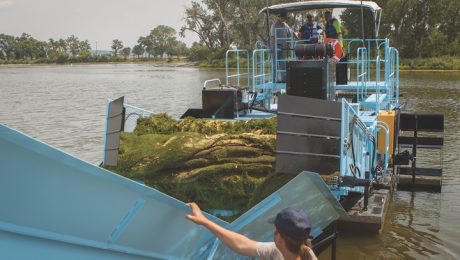
Weed Harvester Unloading into Shore Conveyor
Carter Lake is an old oxbow lake of the Missouri River and is now an urban lake shared by two different cities (Omaha, Nebraska and Carter Lake, Iowa), in two counties (Douglas and Pottawattamie) and two states (Nebraska and Iowa). A vital part of the area’s watershed, Carter Lake is a natural catch basin for
aquatic plant harvestingaquatic vegetationCarter LakeHM-1020Iowalake managementmechanical harvestingNebraskanutrient levelsstormwater runoffvegetation removalwater qualityweed harvesting

Zebra Mussels Can Increase Microcystis Harmful Algal Blooms

  • 0
/ Published in Algae & Harmful Algal Blooms, Aquatic Invasive Species
While invasive zebra mussels consume small plant-like organisms called phytoplankton, Michigan State University researchers discovered during a long-term study that zebra mussels can actually increase Microcystis, a type of phytoplankton known as “blue-green algae” or cyanobacteria, that forms harmful floating blooms. Zebra mussels can filter out the Microcystis with other particles, but then they spit
blue-green algaecyanobacteriagreat lakesharmful algal bloomsinvasive speciesMicrocystisnutrient levelsphytoplanktonwater qualityzebra mussels
TOP