
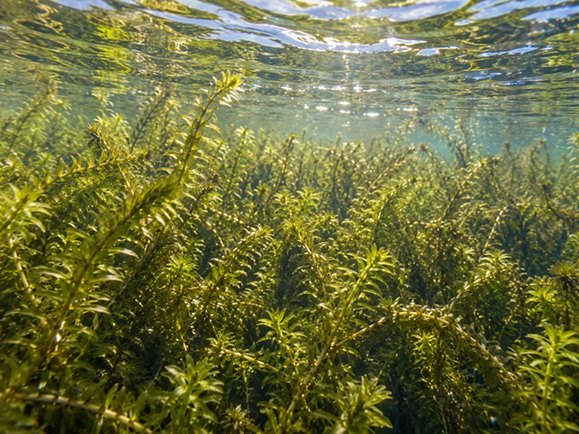
Elodea is a plant commonly found in aquariums that, if released in the wild, will dominate certain lake or river habitats, choking out native vegetation and altering the food web at all levels.
It increases sedimentation rate, allowing more sediment to settle out of the water. And it can decrease the dissolved oxygen concentration in the water because it is growing so rapidly and using up all of that oxygen. But it also just displaces native aquatic plants, which are good forage for a variety of waterfowl species.
In addition, elodea can ruin the clear-water habitat needed by grayling and spawning salmon, and give an advantage to ambush predators like northern pike.
Applications of aquatic herbicide fluridone have appeared to have worked, and there is no elodea visible in Lake Hood (Alaska) now, but the herbicides killed most of the other plant life in Lake Hood as well.