

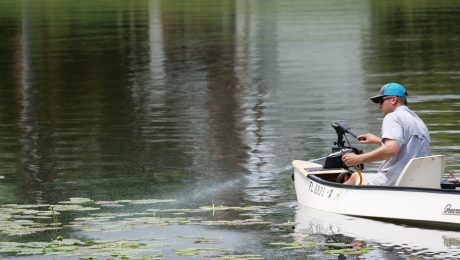
The use of chemical herbicides to control invasive aquatic vegetation in Florida’s Lake Okeechobee is raising questions about potential impacts on drinking water. The lake serves as the primary drinking water source for customers of the Okeechobee Utility Authority, yet herbicides are routinely applied to manage invasive plants. According to a Lake Okeechobee News investigation,
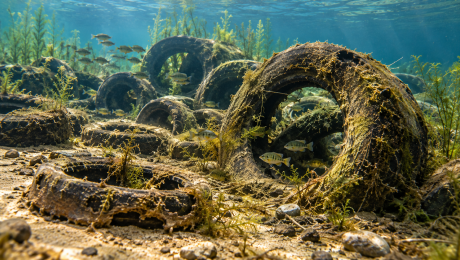
Sometimes an idea makes perfect sense with the information available at the time. In 1994, researchers published the results of an experiment in concrete-lined canals in California and Arizona. Lining the canals helped conserve water, but it also eliminated habitat used by fish and other aquatic organisms. Their solution was innovative: build artificial habitat from

A recent article in The New York Times detailed the retraction of a once-prominent study that supported the safety of glyphosate, the active ingredient in Roundup. The paper had been cited for years as evidence that the herbicide posed minimal risk. But after concerns were raised about conflicts of interest and the integrity of the
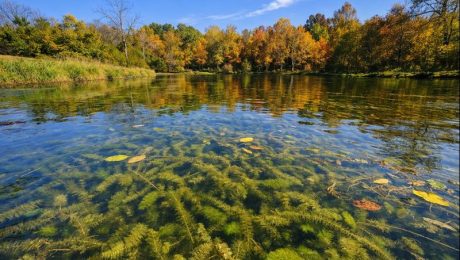
For over a decade, lakes across Northern Wisconsin have spent staggering sums of money attempting to control Eurasian water milfoil with herbicides. The Lower Eagle River Chain of Lakes Commission, formed in 2007 specifically to tackle this invasive species, is a case in point. Eurasian water milfoil grows aggressively, uprooting native vegetation, disrupting aquatic habitats,
Water hyacinth, one of the most invasive aquatic plants, poses serious threats to waterbodies across India, including Pashan Lake in Pune and Powai Lake in Mumbai. As municipal authorities struggle to manage these infestations, the use of herbicides such as glyphosate is being considered as a cheaper and quicker solution. However, applying glyphosate to control
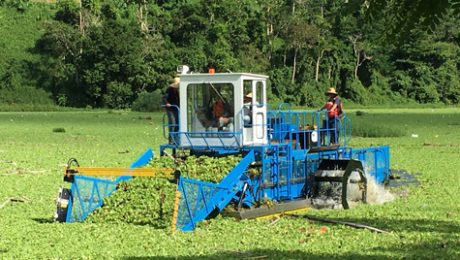
In Stockton, California managers have been trying to keep the water hyacinth that washes in from the Delta under control with herbicide treatments. Unfortunately even after 15 applications, the hyacinth has extended beyond the level of control. Port officials say a state spraying program failed to control the hyacinth, so they contracted with a Bay


Created by melting glaciers thousands of years ago, Lake George is 43,471 acres, 32 mile long, up to 2.5 mile wide and up to 200 feet deep. Located at the southern end of the Adirondack Park in Upstate New York, Lake George is the primary driver of regional tourism, generating $2 billion in annual economic

Following reports of hundreds of dead fish floating in Bayou Rouge in Cottonport, Louisiana, the Louisiana Department of Wildlife and Fisheries (LDWF) conducted an investigation to find out what caused the fish kill. Officials determined that that fish died from a low dissolved oxygen level in the water, basically suffocating the fish. The low dissolved

The Adirondack Park Agency (APA) is using an aquatic herbicide at two points along Lake George in New York State. At both sites, the problem is growth of Eurasian Watermilfoil, an invasive plant species that grows quickly in water bodies it’s tracked into. The APA conducted monitoring and said the herbicide eliminated all traces of
Invasive aquatic plants represent a serious problem in many lakes and waterways. To combat the aquatic weed infestation, herbicides are often applied directly to the water to kill the plants. Many of these herbicides are quite toxic and while permits are required prior to the application there may be flaws with the permit process. Aquatic