


Water hyacinth is often seen as a serious problem in lakes and rivers around the world. The fast-growing invasive plant can clog waterways, block sunlight, reduce oxygen levels, and harm native wildlife. Managing large infestations is difficult and expensive, especially in tropical and subtropical regions where the plant spreads quickly. Now, researchers are exploring whether
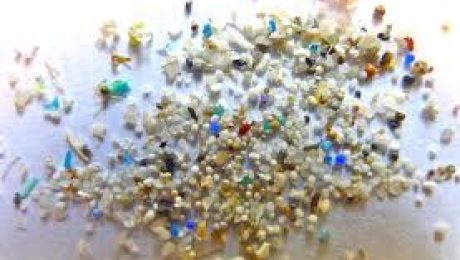
Trash of all kinds exists in the ocean – clean-up crews have found cigarette butts, glass bottles and even mattresses. But the most common type of trash found in the ocean’s gyres (circular currents formed by wind patterns and the earth’s rotation) is tiny pieces of broken down plastics, known as microplastics. Microplastics, as well
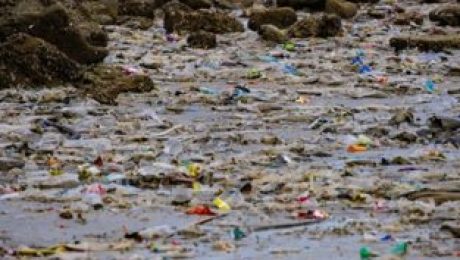
Microplastics are merging with bacteria and turning into large clumps in sea water, scientists have discovered. Glue-like molecules emitted by bacteria – called biopolymers – join with the plastic particles to form large masses. Scientists have warned that these ‘complex’ masses pose a threat to marine wildlife as they can easily mistake them for food.
From the Great Pacific garbage patch to inland rivers, plastics are among the most widespread contaminants on Earth. Microplastics—particles of plastic smaller than five millimeters—are especially pervasive. As they build up in Earth’s waters, microplastics are also becoming a permanent part of the planet’s sedimentary layers. Now, using the Great Lakes as a laboratory, sedimentary