
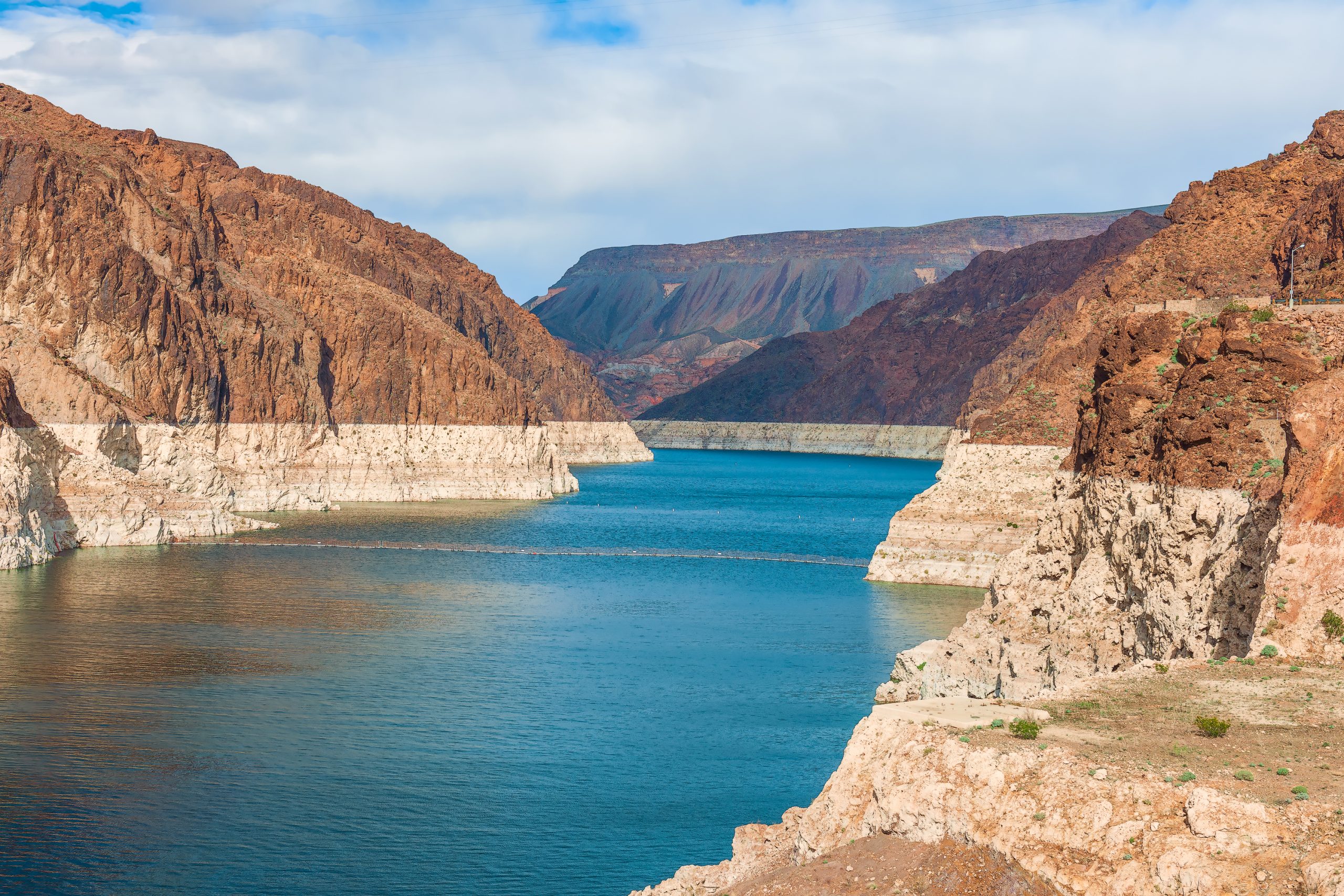
Drought has become widespread across much of the United States this summer. By late July, about 48% of the Lower 48 was experiencing drought, affecting roughly 113 million people. Conditions have worsened across portions of the Northern Plains and Upper Midwest, while the Southwest continues to struggle with the effects of a drought that has persisted for decades.
In the Southwest, three major reservoirs now sit closer to “dead pool” than any others in the country. A reservoir reaches dead pool when its water level falls so low that water can no longer flow downstream through the dam’s outlets. At that point, water deliveries can be disrupted and the dam may no longer be able to generate hydropower.
Elephant Butte Nears Empty
One of the most striking examples is Elephant Butte Reservoir, the largest reservoir in New Mexico. Located along the Rio Grande, the reservoir plays an important role in a region where water is already a precious resource.
As of mid-July 2026, Elephant Butte had fallen to just 2–3% of capacity. The consequences of such low water levels extend well beyond the reservoir itself. Elephant Butte provides irrigation water for hundreds of thousands of acres of farmland in New Mexico and Texas and supplies a portion of El Paso’s water.
Low reservoir levels can also affect recreation and local communities that depend on visitors coming to the lake. As shorelines retreat, boat ramps and marinas can become difficult or impossible to use, changing how people are able to access and enjoy the water.
Lake Powell and Lake Mead Remain Critically Low
Elephant Butte isn’t alone. Lake Powell and Lake Mead, two of the largest and best-known reservoirs in the United States, also remain at historically low levels.
Both are part of the Colorado River system, a water source relied upon by approximately 40 million people and more than five million acres of agricultural land.
In July, Lake Powell was at roughly 27% of capacity. Its water level was about 70 feet above the elevation at which Glen Canyon Dam would no longer be able to generate hydropower.
Farther downstream, Lake Mead was also around 27% full. The reservoir stores water used by communities, farms and businesses in Arizona, California, Nevada and Mexico, while Hoover Dam uses water released from Lake Mead to generate electricity.
Years of drought, combined with the enormous demand placed on the Colorado River, have left both reservoirs far below the levels they once routinely reached.
The Effects Reach Beyond the Southwest
Drought isn’t only a concern in the desert Southwest. This summer’s conditions across other parts of the country are another reminder of how closely our communities are tied to reliable water supplies.
Lower water levels can affect agriculture, drinking water, hydropower and recreation, but they can also change the waterways themselves. Reduced flows and shallower water can lead to warmer water temperatures and changes in water quality and aquatic habitat. Fish and other aquatic organisms may have less suitable habitat available, while recreational access can become more difficult.
Reservoirs are designed to capture water during wetter periods and make it available when conditions turn dry. But when drought continues year after year, even enormous reservoirs have limits.
The conditions at Elephant Butte, Lake Powell and Lake Mead offer a striking reminder that the health and availability of our water resources cannot be taken for granted. Whether it’s a massive reservoir in the Southwest or a lake or river closer to home, reliable water supplies are essential to communities, agriculture, recreation, wildlife and healthy aquatic ecosystems.