

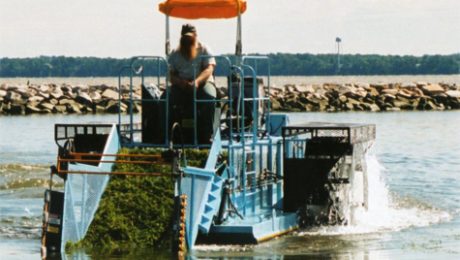
Hydrilla’s roots run deep in Florida. After a Gulf Coast aquarium dealer had the plant shipped from Sri Lanka in the early 1950s, the stringy nuisance has cost government agencies countless millions. Hydrilla grows up to two inches a day, clogging lakes, rivers and canals that flow to the Melbourne-Tillman (C-1) canal in Palm Bay.

The Florida Fish and Wildlife Conservation Commission, the state’s lead agency for hydrilla control since July 1, 2008, faces a daunting challenge. It not only manages the spread of non-native hydrilla by spraying herbicides to maintain waterways for boating navigation and flood control. It also must consider the wants of Florida residents while keeping the

Florida Fish and Wildlife Conservation Commission, the state’s lead agency for hydrilla control since July 1, 2008 faces a daunting challenge. Not only must the agency manage the spread of hydrilla it must maintain waterways for boating navigation and flood control, but it must also consider the wants of Florida residents. While everyone agrees that