
Aquatic invasive species are non-native plants and animals that disrupt ecosystems, harm wildlife, and impact recreation. Learn how they spread, the problems they cause, and safe methods for control and management.


When Pflugerville officials saw hydrilla and pondweed overtaking parts of Lake Pflugerville they called in the Moss Monster. The fast-growing aquatic plants can overcrowd a body of water, which hinders recreational activities and disrupts the ecosystem. Park and city officials fight back against the aquatic plants with mechanical trimmers and specialized fish. For James Wills,

Black Hawk Lake in Iowa will have an aquatic vegetation harvester operating for the fourth year in a row to manage plant growth in the waters near Lake View. Lake View City Administrator, Scott Peterson, says they have developed a system to manage the weeds in a way which benefits all users of the lake.
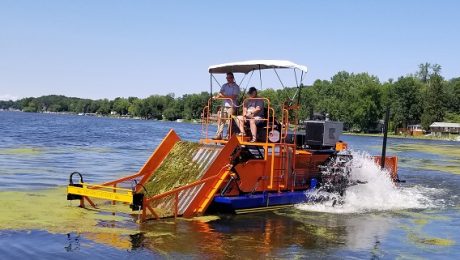
The City of Pflugerville, Texas, has completed six weeks of unwanted vegetation removal at Lake Pflugerville, the City announced Thursday. According to a release by the City, the process resulted in 250 boat loads and approximately 500 cubic yards of aquatic vegetation removed. The aquatic plant harvester cuts the vegetation down approximately 2-5 feet from
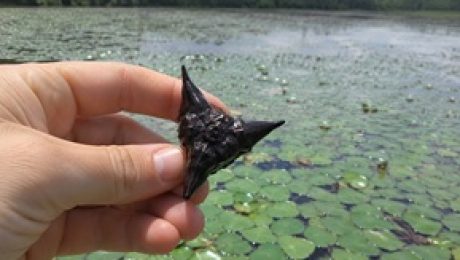
The annual weed pull calling volunteers to Bare Hill Pond in Harvard, Massachusetts; to yank invading water chestnut weeds from the pond’s depths wasn’t held this year. Why? Volunteer Rick Dickson said, “because we finally don’t need it.” The plant is injurious with its four-headed needle-sharp seeds typically making it to shore and cutting the
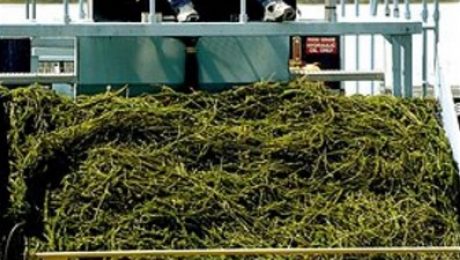
According to a recent survey, more than 200 acres of the lower third of the Connecticut River is overgrown with hydrilla, an invasive aquatic plant that, according to the Connecticut Agricultural Experiment Station, is among the most difficult to control. The hydrilla in the Connecticut River is a new genotype not found in Asia, Europe

A mechanical milfoil harvesting machine has seen steady work on Black Lake in New York this summer, according to one of the owners of the apparatus. Black Lake resident Bob Gordon said he purchased the equipment along with fellow businessman Jay Carter and has been contracting with local waterfront property owners to help pull up
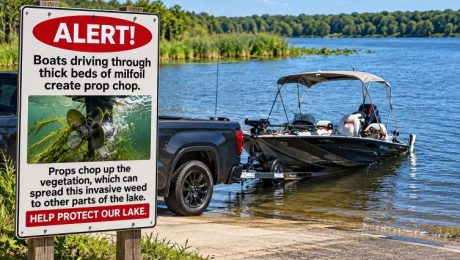
Schroon Lake in New York is infested with curly leaf pondweed and milfoil, two invasive species. But lake advocates and state and local officials are working to keep other aquatic invasives out through a new boat washing station in Severance. Partners are working to keep Schroon Lake free of invasive species, though the lake is
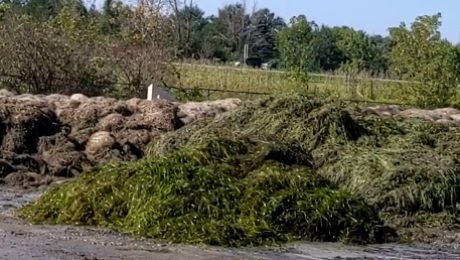
State environmental officials have rejected a plan to use a powerful chemical herbicide to control an invasive water weed in Lake Iroquois in Chittenden County, saying the potential environmental damage did not justify its use. The proposal was rejected because it did not sufficiently consider non-chemical alternatives and could damage native plants along the lakeshore.

Most fishermen just call it “grass.” Others refer to it as “milfoil” (although that is just one species of many). Scientific types called it “aquatic vegetation,” while most dock owners refer to it as “weeds” (or other names we can’t publish here). Whatever you call it, the submergent (underwater) aquatic vegetation growing on area lakes

The Iowa Great Lakes area is an incredible place to live, visit and recreate. Much of their economy is tied to these area lakes. Sometimes, difficult decisions come along, such as the curlyleaf pondweed issue on the north end of East Okoboji. It is an exotic that showed up in the 1950s, but in recent