
Manage invasive and overgrown aquatic vegetation in lakes, rivers, and wetlands. Solutions include mechanical harvesting and safe plant control methods.

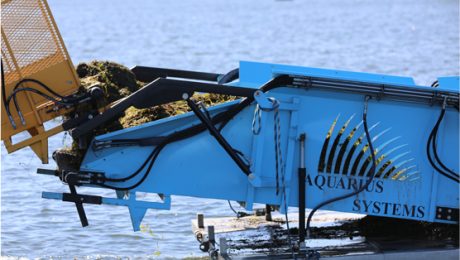
The City of Chestermere, Canada, announced that they had harvested 210,675 kilograms of weeds from Chestermere Lake in 2023. “I know how important the water is to residents who live adjacent to it and all residents of Chestermere. Weed harvesting and weed control are an uppermost issue in most people’s minds,” interim CAO Pat Vincent
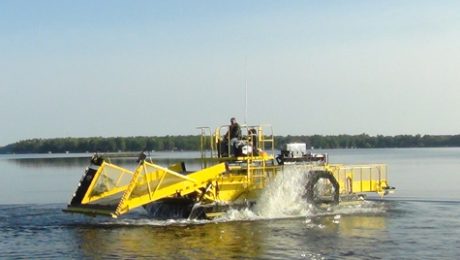
In the 1970’s Lake Minnewawa in Minnesota was so choked with weeds that residents could no longer enjoy the lake as they once had. The water clarity and the phosphorous levels were awful. People would pull their docks out of the water in July because boating was impossible. Save Minnewawa Association was formed in 1977
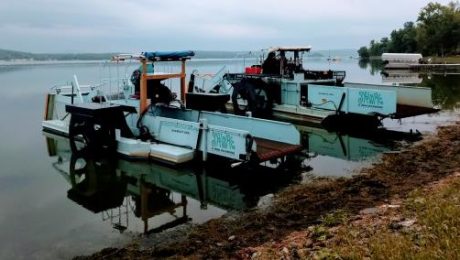
Weed growth in St. Albans Bay in Vermont was not as bad this past summer as anticipated according to Steve Cushing, President of the St. Albans Area Watershed Association (SAAWA). Last year, high, turbid waters and a layer of sediment carried into the lake by flooding and rainfall reduced weed growth, explained Cushing. With clear

Although it only operated for 22 days this fall, the Apple River Protection and Rehabilitation District in Wisconin (ARPRD) removed 112 loads of aquatic vegetation from the Apple River – 251 tons of weeds according to a report by operations manager, Dale Richardson. Harvester operators volunteer their time and currently have 2 primary and 2
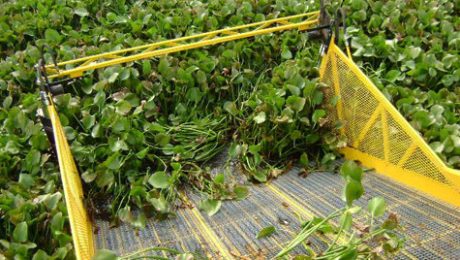
Crews employed by the Chautauqua Lake Association removed 15,584,000 pounds or 7,792 tons of nuisance plant material from the lake this past summer. Also lending a hand were volunteers from Cummins Engine and workers from the county’s Welfare-to-Work Program. Excerpt from Chautauqua Lake Association Newsletter The CLA currently has the equipment, knowledge and manpower to
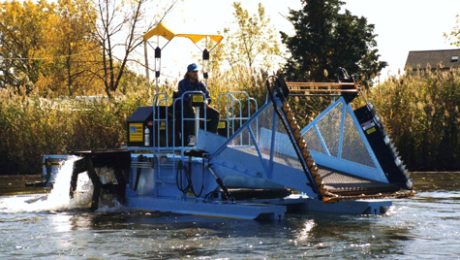
The Village of Wauconda’s lake weed harvester began operation for the season on May 4th. This year it has been operating five days a week, with some of those days having extended hours. To date, 382 cubic yards of aquatic plants have been removed from the lake…which is 64 truckloads of lake weeds disposed of
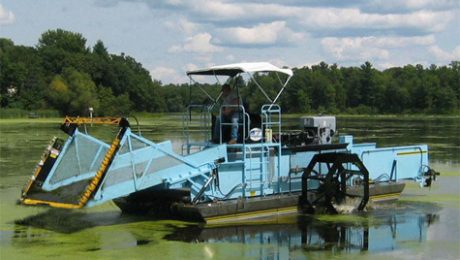
The strategy of the Apple River Protection and Rehabilitation District was to remove as much of the curly leaf pondweed as possible early, then systematically move up and down the Flowage keeping the main navigation channel clear plus providing access channels to the resident along the shoreline whenever practical. Operating under the strict rules of
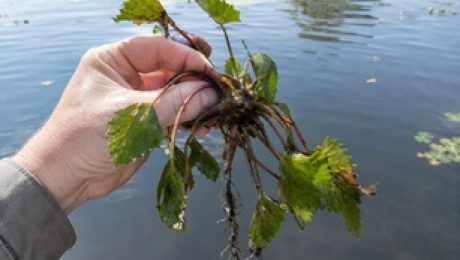
While water chestnut would literally take over the river from shore to shore, the Mystic River Watershed Association and many partners battled the invasive plant with the help of mechanical harvesters and by organizing volunteer hand-pulling events. Water chestnut (Trapa natans) is native to Asia, Europe and Africa. It was introduced in 1897 by a

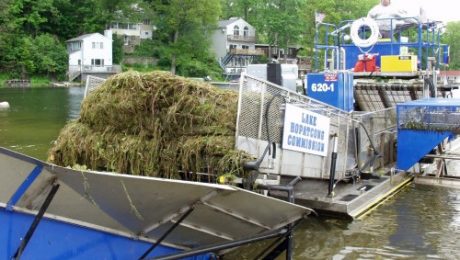
New summer, same problem. The weeds in Lake Hopatcong in New Jersey are back and, according to at least one aquatic and watershed management expert, are “some of the worst” in recent memory. Fred Lubnow, director of aquatics programs at Princeton Hydro, has been studying the lake for more than 20 years. He said in