

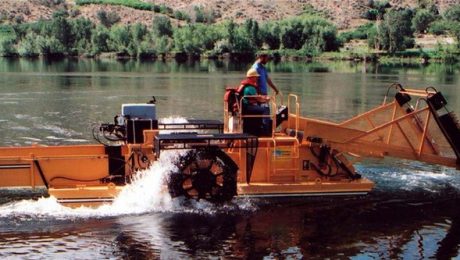
The Okanagan Basin Water Board milfoil program has been so successful over the past five decades. Aquatic weed harvesters used in significant areas with milfoil infestation on Okanagan Lake, British Columbia, Canada are now clear of the invasive plant. Meanwhile, the water board continues to work with the province and environmental consultants to expand existing
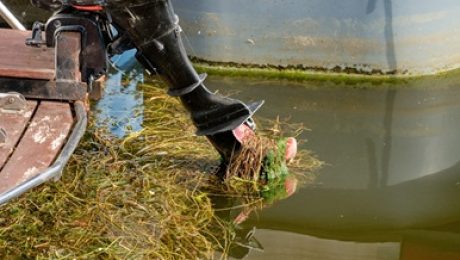
County legislators are considering providing some type of support to a group trying to get rid of the Eurasian milfoil infestation in Black Lake, New York. The milfoil problem is exacerbated when propellers on boats going through the lake chop it up (prop chop) the and spread its seeds. Legislators debated what methods could stop

A public boat launch doesn’t necessarily make access to a lake free. There are costs involved in keeping the waters weed free, navigable for recreation and stocked with fish. McDill Inland Lake Protection and Rehabilitation District’s president Krista Olson asks people visiting any lake to utlize the donation boxes. Those donations are very important for
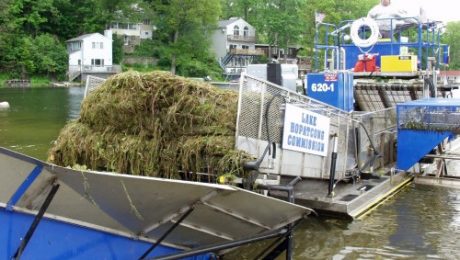
Benefits of Weed Harvesting Dr. Stephen J. Souza Lake Hopatcong Commission Environmental Consultant One of the most obvious management activities of the Lake Hopatcong Commission is the weed harvesting program. Some may view this as a simple “mowing” of the Lake. However, much more is accomplished than simply opening boating lanes and improving swimming. The

An aquatic weed harvester was used to remove macroalgae from Georgica Pond in New York from 2016 through 2018 and on a limited basis last year, an effort to inhibit harmful algal blooms, including toxic cyanobacteria, or blue-green algae. Approval has just been granted for the the mechanical harvester to be operated from June to

Introduced aquatic weeds clog many of New Zealand’s waterways. It affects aquatic life and prohibits access and use for recreational users. Lakeweed Harvesters remove the aquatic plants mechanically, using a harvester mounted on a three metre by seven metre pontoon vessel. The operation works under strict standard operating procedures to ensure maximum weed is harvested