
Manage invasive and overgrown aquatic vegetation in lakes, rivers, and wetlands. Solutions include mechanical harvesting and safe plant control methods.

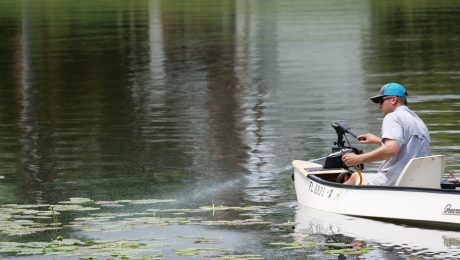
Invasive aquatic plants represent a serious problem in many lakes and waterways. To combat the aquatic weed infestation, herbicides are often applied directly to the water to kill the plants. Many of these herbicides are quite toxic and while permits are required prior to the application there may be flaws with the permit process. Aquatic

The water of Half Moon Lake in Eau Claire, Wisconsin, will hopefully be clearer once the city’s parks, recreation, and forestry division is done harvesting the aquatic vegetation. Due to the significant amount of floating weeds throughout the lake, the city and the Wisconsin Department of Natural Resources are working together to solve the problem.

About 40 trailers full of vallisneria americana, or eelgrass, have been removed from a site on the river nearby the Hamburg Road bridge since Monday, and about another 30 truckloads will be removed by Friday, said Pat Hohl, township supervisor. A Professional Lake Management Inc. crew is using operator-run machinery to harvest, or chop, the
Wisconsin is the birthplace of modern aquatic plant harvesters. The industry has grown in response to what most Americans consider a problem: Too many plants interfering with the recreational use of our lakes and waterways. The first machine was built in response to fussy Chicago housewives! Around the turn of the century, ice was harvested

Sargassum seaweed is growing out of control in many regions – it washes up on beaches in huge amounts. Utilizing a new technique, that rotting organic matter could soon be converted into biofuels and other products. The process doesn’t require the waste seaweed to be removed from the salt water. Instead, it begins with two
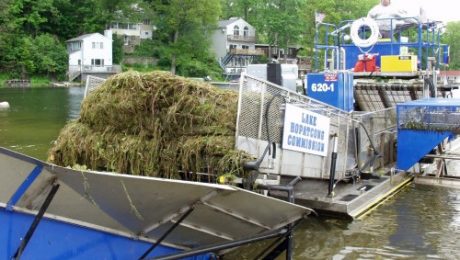
In a typical year, the weed harvesters would usually be on Lake Hopatcong by mid-May. Unfortunately, due to state-wide budget issues weed harvesting has been delayed this season. Weed growth on the lake this year has been stimulated by a mild winter. The lake never fully iced over and this allowed for an early growth

Nyamitanga Division Chairperson Moses Karanzi Kajubi says the move to manually remove the water weed should be supported instead of being criticized. He says that they intend to do the cleaning of the river at least once a month, by pulling the water weed out of the water and cut it into pieces so that
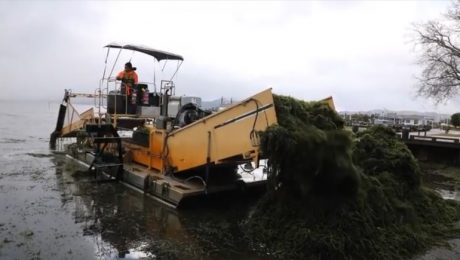
The Department of Natural Resources has completed a Strategic Analysis of Aquatic Plant Management (APM) in Wisconsin, summarizing current information on APM and potential management alternatives. The Strategic Analysis report [PDF] will help inform decision-makers and the public about this topic and aid in the development of future APM policy. While aquatic plants are a

Bow fishing, as opposed to an environmental fish kill, is behind the recent culling of hundreds of carp in Paddock Lake, Wisconsin. Flooding led to a rush of runoff into the lake, which, in turn, reduced oxygen levels. This can lead to a natural fish kill, and some carp perished as a result. However, village