

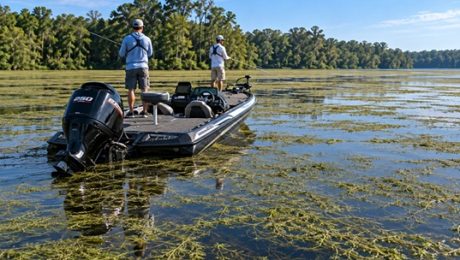
Herbicides, hormone-disrupting chemicals, as well as pathogens and parasites in the water, are the most likely causes for the decade-long decline of prize game fish in the Susquehanna River, a new study by state and federal agencies says. The study by the agency, the Pennsylvania Fish and Boat Commission and six partner agencies is the

During a comprehensive fish survey which included spring, summer and fall netting and electrofishing surveys, Greg Matzke, a fisheries biologist for the Wisconsin DNR discovered that all of the lake’s largemouth bass were older than 5 years of age. After intense sampling last year, only one black crappie was under six years of age and
The war against milfoil in Lake Sunnyside, New York has largely been won — but at the cost of leaving the lake vulnerable to invasion from another plant. Now, curly-leaf pondweed is taking over the lake, and stewards must fight that one too. The problem was that milfoil occupied nearly all of the shoreline, the

David Tyler, publisher of the Cazenovia Republican in Cazenovia New York appreciates and applauds the efforts of the Cazenovia Lake Association and the Lake Watershed Council in their efforts to maintain the health of the lake. With that said, he questions the effect of herbicide treatments on the size and number of fishing being caught.

Lake Isabella has experienced a significant “fish kill” due to low oxygen levels following treatment of an extremely high blue-green algae presence. When the heavy bloom was noted a recommendation was made to close the lake to swimming and boaters and a company was hired to treat the lake with a chemical called SeClear. The
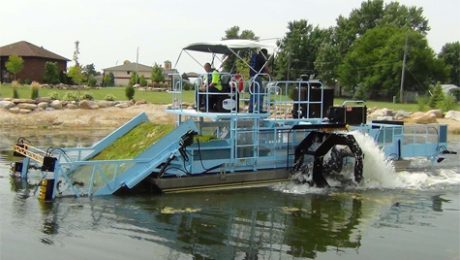
The ongoing battle against aquatic weeds is getting tougher as one of the most invasive species is developing an herbicide-resistant strain and ongoing drought changes the landscape of the lakes. Some lakes use mechanical harvesters to cut weeds and haul them away. In Paddock Lake, Wisconsin, Administrator Tim Popanda said, a two-man crew works on

A scheduled treatment of Eurasian watermilfoil in Lake Opechee in New Hampshire was postponed when the chemical herbicide, Sculpin which is a formulation of 2,4-D, was found to have produced less than optimal results at other locations. While used successfully in the past, recent visits to other locations treated with the herbicide showed the ineffectiveness.

University of Minnesota researchers have reported limited success from an experiment to control an invasive weed in Lake Koronis near Paynesville. Researchers from the Minnesota Aquatic Invasive Species Center have studying how to combat starry stonewort , which has been spread to 11 lakes across the state. They found that a combination of mechanical harvesting

Authorities in the Medong delta province of Hau Giang have banned local authorities from spraying herbicide to the water hyacinth. This fast growing plant has slowly been taking over and blocking waterway traffic on rivers and canals in the area. Many people breed water hyacinth locally to use for making exportable products such as baskets
Public concern over chemical treatment of nuisance weeds in lake Webster prompted the Indiana Department of Natural Resources to limit the amount of herbicides used in the 774-acre lake in Kosciusko County. A lake-wide project wiped out many plants, muddied the water, and upset anglers. DNR biologists reported seeing clumps of floating and dead algae