
Aquatic herbicides, including chemicals like glyphosate, are commonly used to control invasive plants, but they can harm ecosystems, wildlife, and water quality. Learn about the risks and alternatives for managing aquatic vegetation safely.

We realize this article is about terrestrial weeds, but can’t help but make the connection to aquatic plants and the need to have many options in the lake management plan. When weeds begin showing resistance, it’s not a case of the herbicide changing the weed, it’s a simple “survival of the fittest” case, according to

Following reports of hundreds of dead fish floating in Bayou Rouge in Cottonport, Louisiana, the Louisiana Department of Wildlife and Fisheries (LDWF) conducted an investigation to find out what caused the fish kill. Officials determined that that fish died from a low dissolved oxygen level in the water, basically suffocating the fish. The low dissolved

The Adirondack Park Agency (APA) is using an aquatic herbicide at two points along Lake George in New York State. At both sites, the problem is growth of Eurasian Watermilfoil, an invasive plant species that grows quickly in water bodies it’s tracked into. The APA conducted monitoring and said the herbicide eliminated all traces of

In a study recently published in the journal, “Aquatic Toxicology,” researchers found that while concentrations of the herbicide fluridone similar to those used when it’s applied to lakes to control Eurasian watermilfoil and hydrilla can have major impacts on fish reproduction. A research team with the Department of Forest and Wildlife Ecology at the University

The glyphosate-based herbicide Roundup has been found to trigger the loss of biodiversity among phytoplankton communities in freshwater ponds. In their experiments, scientists found that while some populations developed resistance to the herbicide and were able to survive exposure at high levels, this came at a cost, with a 40 percent loss in biodiversity. The
On any given day, helicopters and an armada of airboats fan out across Florida’s fresh waters to spray tank after tank of poison. Pouring millions of gallons of herbicide into rivers and lakes to kill the weeds. What started as sensible navigation and flood control has turned into a million-dollar-a-month chemical addiction that is killing
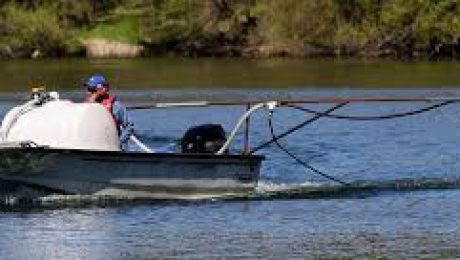
Invasive aquatic plants represent a serious problem in many lakes and waterways. To combat the aquatic weed infestation, herbicides are often applied directly to the water to kill the plants. Many of these herbicides are quite toxic and while permits are required prior to the application there may be flaws with the permit process. Aquatic

Water hyacinth has been on the Delta for decades, but really exploded in 2011 and 2012 as officials were not able to obtain a permit to spray chemicals in a timely fashion. Efforts to control hyacinth in the Deltas focuses primarily on the use of chemical herbicide applications. Officials aggressively spray chemicals; a prepared document

A highly invasive aquatic weed has been discovered in a number of ponds in the Animas Valley in Colorado, putting the heat on to eradicate it before it enters the Animas River and, potentially, Lake Nighthorse. The invasive weed aggressively outgrows and outcompetes native aquatic plants. It can then clog irrigation systems and ponds, and
For 18 years, ecologist Robert Johnson has filed reports on Chautauqua Lake in dry, analytical language, logging the number and density of plant species in the shallow lake bed. Lakes are political, Johnson knew, and he didn’t want to squabble with local officials or residents over how they managed the plants. But late last summer,