
Aquatic herbicides, including chemicals like glyphosate, are commonly used to control invasive plants, but they can harm ecosystems, wildlife, and water quality. Learn about the risks and alternatives for managing aquatic vegetation safely.


Lake managers might be hurting native aquatic plants – instead of helping them – when they use chemicals to control invasive plants on entire lakes. New research by Wisconsin DNR Lakes and River Team Leader Dr. Alison Mikulyuk shows native plant communities can struggle when chemicals are used to target invasive Eurasian watermilfoil. It appears
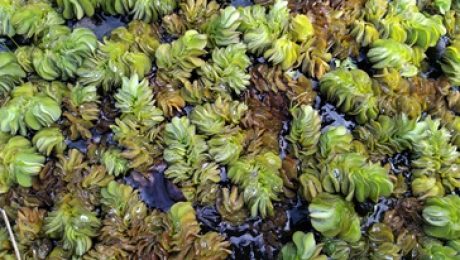
In July, the last known patches of Giant Salvinia, an invasive and aggressive aquatic plant at the Barnett Reservoir in Mississippi, were eliminated. The vegetation was treated with multiple chemicals and then removed, but after six months of Giant Salvinia being absent from the lake, the cleanup team discovered the unwelcomed guest. Apparently a stray
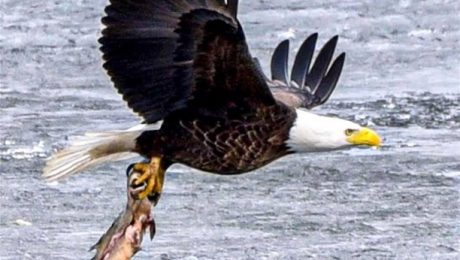
More than 25 years ago, biologists in Arkansas began to report dozens of bald eagles paralyzed, convulsing, or dead. Their brains were pocked with lesions never seen before in eagles. Birds were dying at lakes and reservoirs throughout the southeast, and at every lake Susan Wilde, an aquatic ecologist at the University of Georgia, Athens
In order to stop the destruction of infrastructure by aquatic invasive species, USACE and its partners are using three methods of management: biological, mechanical, and chemical. Each process varies in its effectiveness depending on the species of aquatic plant being treated – leaving the team to rely heavily on data to determine the best method
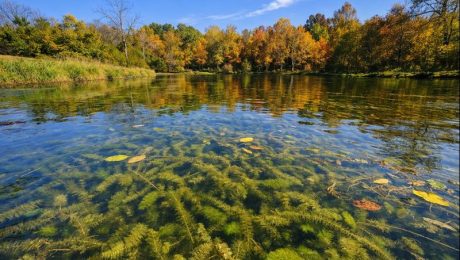
Some shoreline residents of Duck Lake, Michigan aren’t keen on the continued use of chemicals to treat invasive aquatic plants for fear of unintended consequences. Green Lake Township has for years collected a special assessment tax to pay for Eurasian watermilfoil treatments in Duck Lake, an effort to keep the species’s signature mats of floating

The Massachusetts’s Department of Conservation and Recreation is aiming to reduce invasive plant species in Lake Whitehall in a plan that calls for herbicides and mechanical harvesting. The reservoir has extensive growth of “exotic nuisance aquatic vegetation,” including fanwort and variable-leaf milfoil, according to a report by ESS Group, a firmed hired by the state.

New research out of McGill University in Montreal suggests there is cause for concern regarding the effects of the herbicide glyphosate being sprayed on land near waterways. The new studies found glyphosate puts freshwater ecosystems at risk even when its application meets approved guidelines. “And what we found is … glyphosate concentrations as low as


Imidacloprid is the world’s most popular pesticide, and highly controversial. It belongs to a family of neurotoxins, neonicotinoids, that is increasingly being blamed for colony collapse disorder—the sharp die-off of honeybees that has plagued North America since 2006. The U.S. Fish and Wildlife Service, the National Marine Fisheries Service, the National Audubon Society, and the

Hydrilla. The word alone sends shivers down the spines of anyone living, associated, or recreates on waterways. It sends people into panic mode, as it should. Hydrilla is an aquatic invasive species that has slowly been invading waters of the United States since being introduced in Florida in the 1960’s. Hydrilla in one of the
Pesticide resistance is a major problem that occurs when a pesticide is used for control for years and then will no longer kill the pest. This is a billion dollar problem for US agriculture. In 1999 the cost of pesticides and the yield loss of crops to pesticide resistance was estimate at $1.5 billion in