
Manage invasive and overgrown aquatic vegetation in lakes, rivers, and wetlands. Solutions include mechanical harvesting and safe plant control methods.

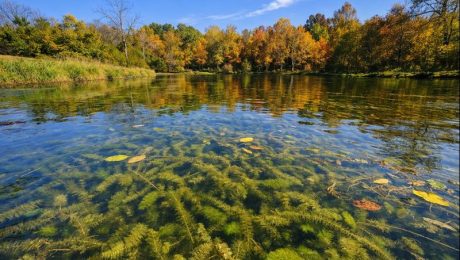
For over a decade, lakes across Northern Wisconsin have spent staggering sums of money attempting to control Eurasian water milfoil with herbicides. The Lower Eagle River Chain of Lakes Commission, formed in 2007 specifically to tackle this invasive species, is a case in point. Eurasian water milfoil grows aggressively, uprooting native vegetation, disrupting aquatic habitats,
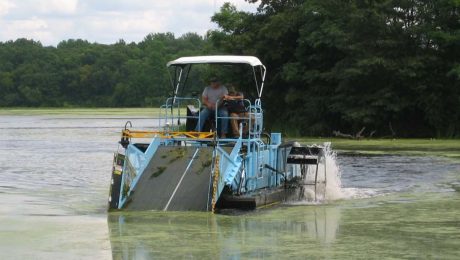
As the harvest season winds down, aquatic weed harvesters across the region are being pulled from the water and stored for winter. For many lake districts, this time of year brings a chance to reflect on the season’s results—and the numbers out of Polk County are impressive. The Apple River Protection and Rehabilitation District (ARPRD)

Following a chemical treatment aimed at controlling aquatic vegetation in Port St. Lucie’s Elkhorn Canal, residents reported what they called the “worst smell in the entire world” as countless fish perished on the canal’s surface. Water tests revealed that dissolved oxygen levels plunged to levels unsustainable for aquatic life—an unintended but severe consequence of the
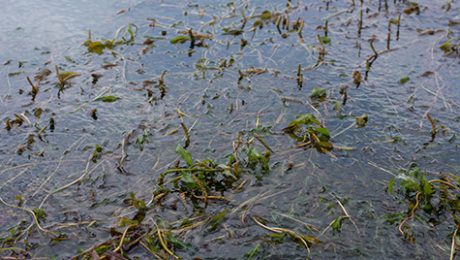
Hydrilla, a non-native aquatic plant, has been labeled one of the world’s most invasive species. While it can dominate shallow, warm waters in places like Florida, its threat in deep, cold lakes such as those in New York is far less clear. Nevertheless, aggressive chemical eradication campaigns have been launched across the state, including in

Lakes and wetlands across the United States are facing a big problem — the loss of important aquatic plants. One example is Lake Mattamuskeet in North Carolina, where underwater plants have almost disappeared. This loss is hurting the lake’s health and the many birds that depend on it. Aquatic plants are very important for keeping
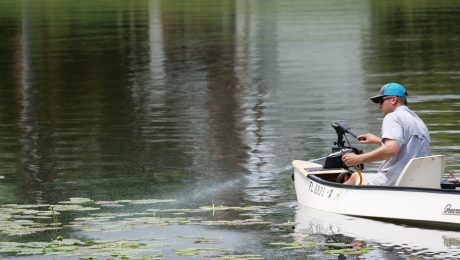
Water hyacinth, one of the most invasive aquatic plants, poses serious threats to waterbodies across India, including Pashan Lake in Pune and Powai Lake in Mumbai. As municipal authorities struggle to manage these infestations, the use of herbicides such as glyphosate is being considered as a cheaper and quicker solution. However, applying glyphosate to control

A new invasive type of water hyacinth, Salvinia spp., has been discovered in Lake Victoria. It reproduces rapidly, doubling its biomass within 8 days due to high nutrient levels caused by human activities such as improper waste disposal and deforestation. Over 36 tons have already been removed, but the plant continues to spread, threatening fish
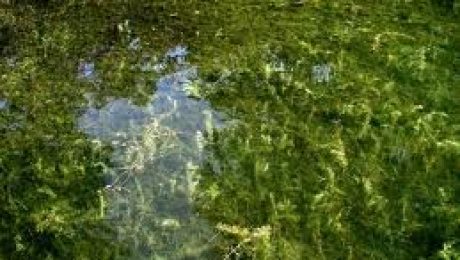
Aquatic plants play a crucial role in freshwater ecosystems, offering essential habitats for fish and supporting a wide range of ecosystem services. Known as macrophytes, these plants grow in or around water and can either be rooted in soil or float, with some being partially or fully submerged. Researchers from Michigan State University surveyed 78
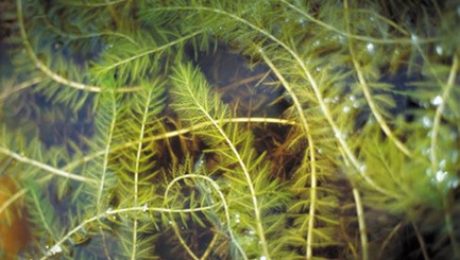
Invasive Eurasian water milfoil is flourishing in Wisconsin’s lakes, sometimes outcompeting native plants and creating floating mats that cause problems for people, boats and property values. But new research shows that the benefits of using one type of historical lake-wide herbicide treatment may be outweighed by the costs to native aquatic plants. Lake management teams