


Lake Hallie Lake Association is making some headway in the war they’ve been waging against the hybrid watermilfoil weed. First discovered in Lake Hallie in 2005, watermilfoil is an invasive aquatic plant that has an aggressive tendency to form a thick mat-like layer as it floats on the water. If left unchecked, this plant can
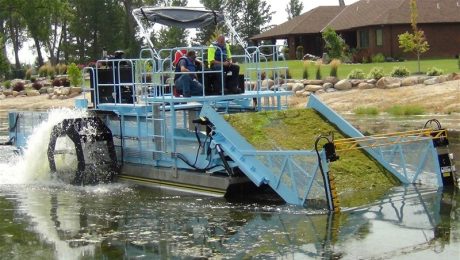
Fall has barely begun and the Lakes Area community is already preparing for next year’s battle against the invasive curlyleaf pondweed. The weed caused navigational issues on the lake this past season as it clogged boat motors and jammed dock lifts. The Iowa Department of Natural Resources, local government entities, area protective agency representatives and

Trapa natans is native to Western Europe and Africa and northeast Asia, including eastern Russia, China, and southeast Asia to Indonesia. Trapa natans was first introduced to North America in the mid- to late-1870s, when it is known to have been introduced into the Cambridge botanical garden at Harvard University around 1877. A decade later

WISN met with our team at Aquarius Systems as well as visiting the Lake Beulah Management District to see these amazing machines that are “Made in Wisconsin”. According to Jane Dauffenbach, President of Aquarius Systems, at the factory in North Prairie they make metal float. The raw material comes in and the talented staff bend
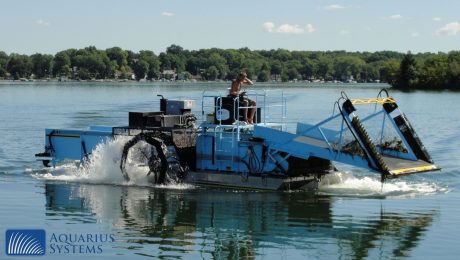
In recent years Fox Lake in Wisconsin has responded to a decade of water quality management that has shifted the lake from being turbid with frequent algae blooms to a clearer water condition. This has fostered improved lake use, the return of aquatic plants and a more balanced fishery. One consequence of the water quality

A public boat launch doesn’t necessarily make access to a lake free. There are costs involved in keeping the waters weed free, navigable for recreation and stocked with fish. McDill Inland Lake Protection and Rehabilitation District’s president Krista Olson asks people visiting any lake to utlize the donation boxes. Those donations are very important for

In the last few decades, the lake’s weedy, northern-most portion has clogged hulls and deterred boaters from entering the lake from the Oswegatchie River. Patches of weeds greet the water’s surface near every dock, and nearly invisible from a distance on a windy day, matted greenery creates a basin of weeds seven-feet-deep in some spots.
