

Taking the Wins in 2024 A Message from our Leader: New Year Includes our Company’s 60th Year in Business “Dead Zone” Smallest Since Monitoring Began Re-establishing Native Aquatic Plants Holding Industrial Polluters Accountable Upcoming Conferences: Northeast Aquatic Plant Management Society 25th Anniversary Meeting Pennsylvania Lake Management Society 33rd Annual Conference Weed Science Society of America
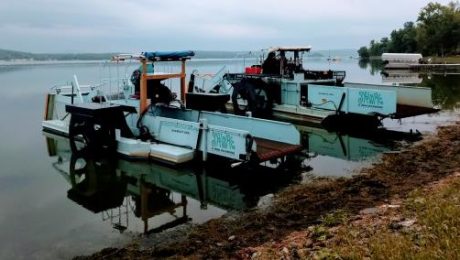
Weed growth in St. Albans Bay in Vermont was not as bad this past summer as anticipated according to Steve Cushing, President of the St. Albans Area Watershed Association (SAAWA). Last year, high, turbid waters and a layer of sediment carried into the lake by flooding and rainfall reduced weed growth, explained Cushing. With clear

Although it only operated for 22 days this fall, the Apple River Protection and Rehabilitation District in Wisconin (ARPRD) removed 112 loads of aquatic vegetation from the Apple River – 251 tons of weeds according to a report by operations manager, Dale Richardson. Harvester operators volunteer their time and currently have 2 primary and 2
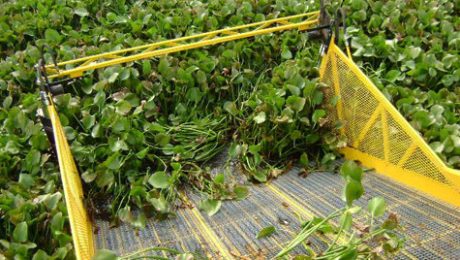
Crews employed by the Chautauqua Lake Association removed 15,584,000 pounds or 7,792 tons of nuisance plant material from the lake this past summer. Also lending a hand were volunteers from Cummins Engine and workers from the county’s Welfare-to-Work Program. Excerpt from Chautauqua Lake Association Newsletter The CLA currently has the equipment, knowledge and manpower to
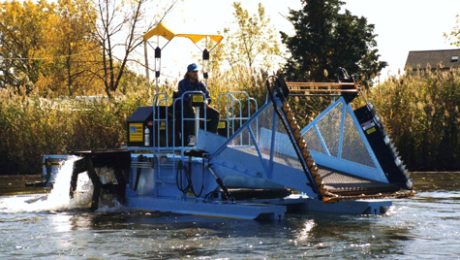
The Village of Wauconda’s lake weed harvester began operation for the season on May 4th. This year it has been operating five days a week, with some of those days having extended hours. To date, 382 cubic yards of aquatic plants have been removed from the lake…which is 64 truckloads of lake weeds disposed of

Bioengineering is defined by the Michigan Department of Environmental Quality as “using a combination of native planting and natural, or biodegradable materials to provide shoreline protection.” It also is often referred to as softshore engineering or lakescaping. Many shorelines use seawalls. These are a hard surface, such as wood, metal or concrete, that is installed
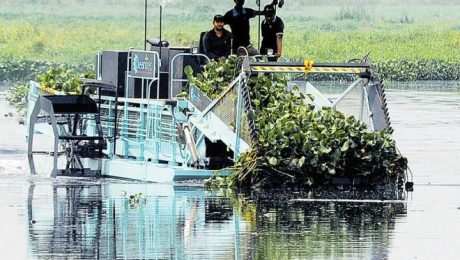
Around 3,707 tonnes (4086 tons U.S.) of weeds have been cleared from the 910-acre Bellandur lake. In the past five days alone 737 tonnes (812 tons U.S.) have been removed by just two machines, according to an official release issued by the Bangalore Development Authority. The BDA is said to be using three weed harvesters

Heavy metal poisoning is a growing concern in many parts of the country. A new method for removing chromium-6, a highly toxic heavy metal, from waste water has been developed by a group of scientists from India and Ethiopia. They claim it to be low-cost and safe. The new method uses water hyacinth, a weed
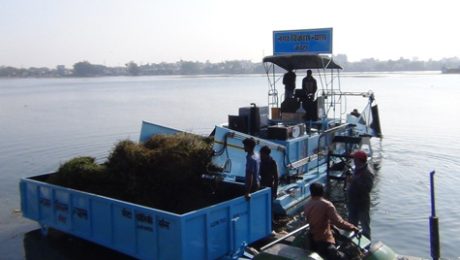
After 20,000 tonnes of weed removed, the southern side of Bellandur Lake, once again resembles a water body. But the waters soon disappear into a thick cover of grass. About 120-150 acres of the 910-acre lake is still covered by 25,000 tonnes of grass. Executives of Harvins Constructions Private Limited, the company tasked with de-weeding
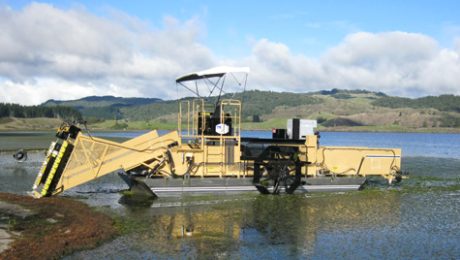
Work to restore Lake Horowhenua’s environmental health, which has been progressing well since the establishment of the Lake Horowhenua Accord in 2013, will increase in momentum later this year following a High Court decision. The Court’s decision was to dismiss an appeal made by the Hokio Trust, allowing Horizons Regional Council’s weed harvester to undergo