

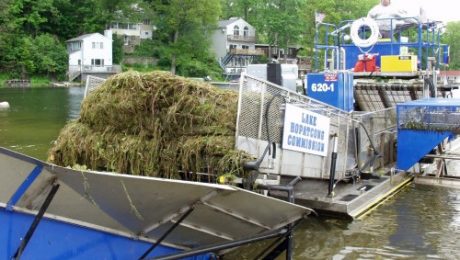
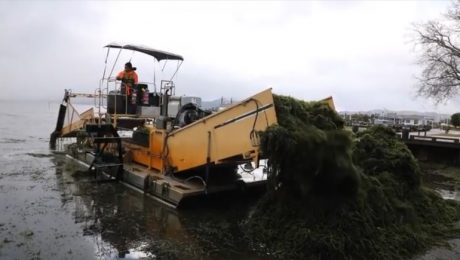
In a typical year, the weed harvesters would usually be on Lake Hopatcong by mid-May. Unfortunately, due to state-wide budget issues weed harvesting has been delayed this season. Weed growth on the lake this year has been stimulated by a mild winter. The lake never fully iced over and this allowed for an early growth

An extensive three-year research study of lakes in and around the Grand Portage Indian Reservation in Minnesota has found an abundance of pharmaceuticals, personal care products, hormones, pesticides, and other chemicals in water, lake bottoms and fish. What threat this poses for humans and wildlife will need to be studied further. But the presence of

Every spring, Dr. Carl Isaacson, a professor of environmental studies at Bemidji State University, sends his students out to collect perch from waters across Minnesota. Then, they study an egg yolk protein found in the perch’s’ livers, called vitellogenin, which may provide evidence of endocrine disruption in the state’s aquatic species. Over the past few
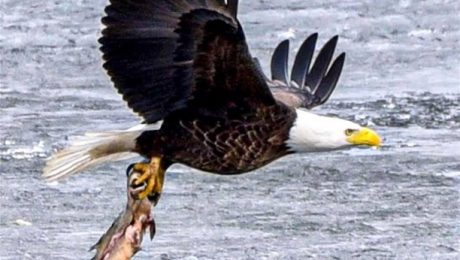
Decades ago several bird species in the Great Lakes—including the iconic bald eagle—faced an uncertain future because toxic chemicals were threatening their populations. While several bans and policies have offered some protection, the same chemicals threatening these birds 60 years ago continue to accumulate in their bodies—and new chemical threats are adding to their toxic
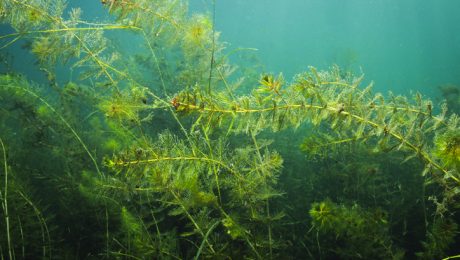
New research has found that hurricanes in the United States are dispersing invasive species across the country. Fueled by climate change, hurricanes are becoming more frequent and intense, research shows; as a result, extreme storms are carrying and scattering hundreds of invasive species such as Asian swamp eels and zebra mussels into new regions of

Water hyacinth has been on the Delta for decades, but really exploded in 2011 and 2012 as officials were not able to obtain a permit to spray chemicals in a timely fashion. Efforts to control hyacinth in the Deltas focuses primarily on the use of chemical herbicide applications. Officials aggressively spray chemicals; a prepared document
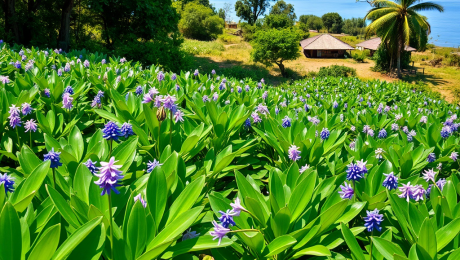
Water hyacinth has been the scourge of the Delta in recent years, but by this summer it could be providing the power to city lights. A pilot project is in the works to harvest it for biogas. Port of Stockton Environmental Manager Jeff Wingfield says the port is proposing a pilot project to harvest the

Heron Lake in far southwestern Minnesota was once considered one of North America’s most productive waterfowl lakes and in an effort return the lake into a productive waterfowl rest stop, the DNR has once again revamped their management plant. The DNR will systematically be adding predatory fish to sharpen the attack against the destructive carp,

Nyamitanga Division Chairperson Moses Karanzi Kajubi says the move to manually remove the water weed should be supported instead of being criticized. He says that they intend to do the cleaning of the river at least once a month, by pulling the water weed out of the water and cut it into pieces so that
The Department of Natural Resources has completed a Strategic Analysis of Aquatic Plant Management (APM) in Wisconsin, summarizing current information on APM and potential management alternatives. The Strategic Analysis report [PDF] will help inform decision-makers and the public about this topic and aid in the development of future APM policy. While aquatic plants are a