
Manage invasive and overgrown aquatic vegetation in lakes, rivers, and wetlands. Solutions include mechanical harvesting and safe plant control methods.

It is exhausting reading about lake after lake after lake becoming infested with an over abundance of aquatic vegetation. This plant material not only negatively affects water quality, the health of the fishery, recreation, aesthetics, but it is financially devastating as well. It affects tourism; bait shops, marinas, hotels, restaurants. It affects lake property owners;


A fairly dry winter with very little snowfall plus near drought like conditions this summer has lead to even more aquatic plants. Another invasive species is quickly filling in exposed lake beds which are occurring due to historic low water levels. Phragmites, the Common Reed, is a large perennial grass that can grow up to

Native to Africa and believed to have been introduced to American waters from the aquarium trade in the 1960’s, hydrilla has quickly spread across the southern U.S. from Connecticut to California. By the 1990’s millions was spent yearly on its control, but this year New York alone has budgeted $800,000 to fight the invasive aquatic plant.

Ninety-eight percent of Malawi’s electricity supply comes from five hydro plants on the Shire River. An increase in floating aquatic weeds and debris caused serious operational problems at the stations and resulted in millions of dollars spent on repairs. For example, the intake structures at one plant were so blocked by accumulated weeds, water could not
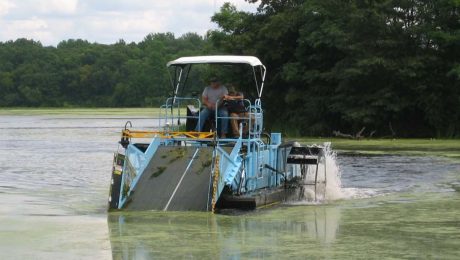
The Bakersfield big blue mechanical monster in the lake is pretty intimidating up close. The aquatic weed harvester acts like an underwater lawn mower. It moves about 5 mph and has cutter blades underneath it with an adjustable swath of about 8 feet wide and 6 feet deep. The blades cut the weeds as they

In the 1970’s, Lake Minnewawa was so choked with weeds that residents could no longer enjoy the lake. Boating was impossible and water clarity and phosphorous levels were awful. A group of concerned residents decided they needed to do something to save the lake and on December 15, 1977 as association was formed calling itself
Aquatic Plant Harvesters offer an environmentally sound method of controlling excessive aquatic plant growth and nuisance vegetation in waterways of all sizes. These heavy duty work boats are highly efficient in the management of submerged, emergent and free floating aquatic vegetation. Like an underwater lawn mower, an aquatic weed harvester cuts aquatic vegetation, collecting and storing