


In the last few decades, the lake’s weedy, northern-most portion has clogged hulls and deterred boaters from entering the lake from the Oswegatchie River. Patches of weeds greet the water’s surface near every dock, and nearly invisible from a distance on a windy day, matted greenery creates a basin of weeds seven-feet-deep in some spots.


Floating weed harvesters have opened passages through Dane County Wisconsin’s dense tangles of underwater plants for about 50 years. The barges wield rotating cutting bars like those on farm combines to cut a submerged crop that is fertilized too well by runoff of nutrients like dairy manure. Each spring, the county launches a flotilla of

As a child, growing up on the lake was an amazing experience. Summer days were filled with fishing, swimming, and catching frogs. Winters were filled with ice skating, more fishing, and hockey. There was always something to do on or near the water! I fondly remember sitting on the pier with my brother; toes just

Efforts to restore Georgica Pond are proving to be successful thanks in part to the help of an aquatic weed harvester. Georgica Pond has been invaded by toxic cyanobacteria, or blue-green algae, in recent years, which can cause serious health problems. For the second consecutive year, the foundation has leased an aquatic weed harvester to


A fairly dry winter with very little snowfall plus near drought like conditions this summer has lead to even more aquatic plants. Another invasive species is quickly filling in exposed lake beds which are occurring due to historic low water levels. Phragmites, the Common Reed, is a large perennial grass that can grow up to

Little thought is given to aquatic weeds unless you live or recreate on the worlds waterways. The aquatic plant harvester industry has grown in response to those concerns. With Pictures of steam powered cutter boats dating back to the late 1890’s, we know that excessive plant growth has been a problem for a long time.
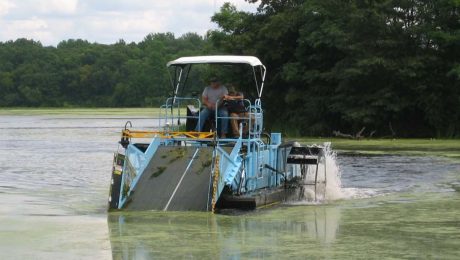
The Bakersfield big blue mechanical monster in the lake is pretty intimidating up close. The aquatic weed harvester acts like an underwater lawn mower. It moves about 5 mph and has cutter blades underneath it with an adjustable swath of about 8 feet wide and 6 feet deep. The blades cut the weeds as they

In the 1970’s, Lake Minnewawa was so choked with weeds that residents could no longer enjoy the lake. Boating was impossible and water clarity and phosphorous levels were awful. A group of concerned residents decided they needed to do something to save the lake and on December 15, 1977 as association was formed calling itself

By Rochelle Feil Wednesday, August 1, 2007 This harvest feeds no hunger, just a compost pile. The benefit from the harvest is safety and convenience for users of parks along the Columbia River in Washington: no tangled feet and easier launching for boaters. Ben Mendoza and Randy Smith, Chelan County PUD park maintenance personnel, spend