


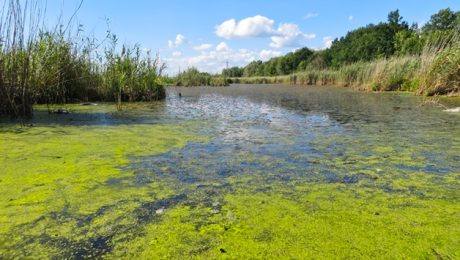
Efforts to restore Georgica Pond are proving to be successful thanks in part to the help of an aquatic weed harvester. Georgica Pond has been invaded by toxic cyanobacteria, or blue-green algae, in recent years, which can cause serious health problems. For the second consecutive year, the foundation has leased an aquatic weed harvester to

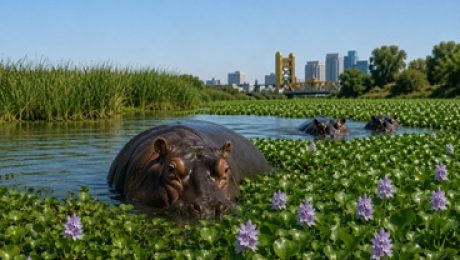
In 1909, the United States was suffering a shortage of meat. At the same time, Louisiana’s waterways were being choked by invasive water hyacinth. The solution seemed to be simple, the American Hippo Bill. Hippos could be imported to the United States to eat the water hyacinth and people can eat the hippos. The bill
Aquatic plants, whether invasive or native, can be described as either a mess or a resource. Natural plant growth covers 20 – 40% of the water and includes a diversity of plants. However, invasive plants such as Eurasian watermilfoil, hydrilla and water hyacinth quickly take over a lake covering 60% and sometimes 100% of the

It is exhausting reading about lake after lake after lake becoming infested with an over abundance of aquatic vegetation. This plant material not only negatively affects water quality, the health of the fishery, recreation, aesthetics, but it is financially devastating as well. It affects tourism; bait shops, marinas, hotels, restaurants. It affects lake property owners;

Unlike using chemicals, or doing nothing at all, the advantages of harvesting include: – Immediate relief from nuisance plants that interfere with navigation and recreation – Immediate use of the water for swimming or irrigation – There is nothing foreign introduced to the environment when using mechanical control – Biomass is removed from the water
In December, 2010 Wisconsin became the first state in the country to adopt phosphorus water quality standards for lakes, reservoirs, rivers, and streams. The Environmental Protection Agency has approved Wisconsin’s revised rule as a revision to Wisconsin’s federally-approved National Pollutant Discharge Elimination System program under the Clean Water Act. Under the new rules DNR determines