(262) 392-2162 | info@aquarius-systems.com
  • Contact Us
  • Resources
  • Careers

Aquarius-Systems

  • Home
  • Equipment
    Weed Harvesters
    Aquatic Excavators
    Canal Cleaners
    Vegetation Shredders
    Trash Skimmers
    Transport Barges
    Trailers
    Offloading Conveyors
  • Service
    Parts & Service
    Equipment Manuals
    Safety Guide
  • About Us
  • Media
  • Latest
  • Quote

Prop Chop Spreads Eurasian Milfoil in Black Lake as Officials Debate Control Options

  • 0
/ Published in Aquatic Invasive Species, Lake & Waterway Management
Boat Propeller Tangled in Weeds
County legislators are considering providing some type of support to a group trying to get rid of the Eurasian milfoil infestation in Black Lake, New York. The milfoil problem is exacerbated when propellers on boats going through the lake chop it up (prop chop) the and spread its seeds. Legislators debated what methods could stop
aquatic invasive speciesaquatic plant harvesterboating impactschannel dredgingeurasian milfoilinvasive aquatic plantslake managementmechanical harvestingnavigation lanesNew Yorkprop chopweed harvesting

Salvinia Minima Spreads in South Africa After Water Hyacinth Control

  • 0
/ Published in Aquatic Invasive Species, Water Quality & Pollution
Invasive Aquatic Weed Salvinia
Hartbeespoort Dam in South Africa has a new invasive aquatic weed to battle, Salvinia minima. The proliferation of common salvinia, just as water hyacinth came under biological control through the combined efforts is no coincidence. In areas that experience high levels of nutrient inflow (pollution), the control of one aquatic weed opens resources to other
aquatic invasive speciesbiological controlcommon salviniaeutrophicationHartbeespoort Daminvasive aquatic plantslake managementnutrient pollutionsalvinia minimasecondary invasionSouth Africawater hyacinth

Donations Help Fund Weed Harvesting and Lake Maintenance at Public Boat Launches

  • 0
/ Published in Aquatic Plant Management, Lake & Waterway Management
Mechanical Weed Harvester in Wisconsin
A public boat launch doesn’t necessarily make access to a lake free. There are costs involved in keeping the waters weed free, navigable for recreation and stocked with fish. McDill Inland Lake Protection and Rehabilitation District’s president Krista Olson asks people visiting any lake to utlize the donation boxes. Those donations are very important for
aquatic plant harvesterboating accesscommunity fundinglake districtlake maintenancelake managementmechanical harvestingnavigation lanespublic boat launchrecreation accessweed harvestingWisconsin

Benefits of Weed Harvesting for Water Quality and Nutrient Removal

  • 0
/ Published in Aquatic Plant Management, Resources
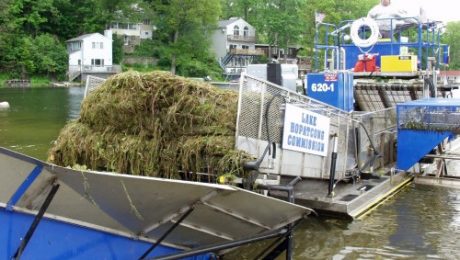
Lake Weed Harvester and Offloading Conveyor
Benefits of Weed Harvesting Dr. Stephen J. Souza Lake Hopatcong Commission Environmental Consultant One of the most obvious management activities of the Lake Hopatcong Commission is the weed harvesting program. Some may view this as a simple “mowing” of the Lake. However, much more is accomplished than simply opening boating lanes and improving swimming. The
algae controlaquatic plant harvesteraquatic vegetation removaleutrophicationlake hopatconglake managementmechanical harvestingnutrient removalphosphorussedimentationwater qualityweed harvesting

Study Finds Strategic Weed Harvesting Can Remove Phosphorus and Support Clear Lake Management

  • 0
/ Published in Lake & Waterway Management, Resources
Aquatic Plant Harvester Removing Weeds
Intensive in-lake and watershed management caused Kohlman Lake, the northernmost lake in the Phalen Chain of Lakes in Minnesota, to go from a relatively turbid to a clear water state. Aquatic plants responded to the clean waters by growing up to the surface. The change in lake state and a comprehensive water quality monitoring dataset
aquatic plant managementaquatic vegetationKohlman Lakelake managementmechanical harvestingMinnesotanutrient removalphosphorusrecreation accesstotal phosphoruswater qualitywatershed managementweed harvesting

Montana Boat and Seaplane Inspections Help Prevent Invasive Mussels From Spreading

  • 0
/ Published in Aquatic Invasive Species, Resources
Inland Lake Harvester with Seaplane
Keeping aquatic invasive species out of Montana bodies of water, specifically invasive mussels, is very important to protecting the native fish and plant species in the area. Researchers said cleaning, draining and drying boats is nearly 100% effective at keeping AIS out of Montana. That is why boat inspections are required in the state. Seaplanes
AIS trainingaquatic invasive speciesboat inspectionsclean drain dryfish habitatinvasive musselsinvasive species preventionlake managementMontanaseaplane inspectionswaterway protectionzebra mussels

USACE Uses GPS Tracking to Improve Transparency of Aquatic Herbicide Applications

  • 0
/ Published in Aquatic Herbicides, Lake & Waterway Management
Spraying herbicides on aquatic plants.
In order to stop the destruction of infrastructure by aquatic invasive species, USACE and its partners are using three methods of management: biological, mechanical, and chemical.   Each process varies in its effectiveness depending on the species of aquatic plant being treated – leaving the team to rely heavily on data to determine the best method
aquatic herbicidesaquatic invasive speciesbiological controlchemical treatmentcontractor oversightGPS trackingherbicide applicationinvasive aquatic plantslake managementmechanical harvestingspray trackingUSACEwater resources

Study Links Human Shoreline Disturbance to Changes in Aquatic Plants and Algal Blooms

  • 0
/ Published in Algae & Harmful Algal Blooms, Lake & Waterway Management
Shorelines help filter pollutants, protect against erosion and provide habitat for fish and other forms of wildlife.
Algal blooms in Bednesti Lake, British Columbia, Canada, over recent years led researchers to look into how humans impact aquatic life. Overall what they found was a chain reaction, when a type of aquatic plant like a lily pad was removed, other plants disappeared too. Researchers analyzed 16 human-caused disturbances and 10 natural disturbances to
algal bloomsaquatic plantsBritish ColumbiaCanadaecosystem changehabitat losshuman impactslake healthlake managementlily padsshoreline disturbancewater quality

Black Lake Weed Harvester Removes 6,000 Pounds of Invasive Milfoil to Improve Boating Access

  • 0
/ Published in Aquatic Plant Management, Lake & Waterway Management
Aquarius Systems HM-620 Plant Harvester
In the last few decades, the lake’s weedy, northern-most portion has clogged hulls and deterred boaters from entering the lake from the Oswegatchie River. Patches of weeds greet the water’s surface near every dock, and nearly invisible from a distance on a windy day, matted greenery creates a basin of weeds seven-feet-deep in some spots.
aquatic invasive speciesaquatic weed harvesterBlack Lake New Yorkboating accesscompostingeurasian watermilfoilfertilizerinvasive aquatic plantslake managementmechanical harvestingmilfoilnavigation channelsnutrient removalweed harvesting

Iowa Crews Harvest Nearly 1 Million Pounds of Curlyleaf Pondweed to Clear Boat Lanes

  • 0
/ Published in Aquatic Plant Management, Lake & Waterway Management
Aquarius Systems Large Weed Harvester
With all of the rainfall over the past three weeks or so, the topic of curlyleaf pondweed has kind of taken a back seat. However, as we enter the month of July, it is a good time to reflect on the results of the 2018 curlyleaf pondweed treatment and harvesting process. Mechanical harvesting of East
aquatic invasive speciesaquatic weed harvesterboating accesscompostingcurly leaf pondweedcurlyleaf pondweedEast Okobojiinvasive aquatic plantsIowalake managementLower Garmechanical harvestingnavigation lanesweed harvesting
  • 22
  • 23
  • 24
  • 25
  • 26
TOP