

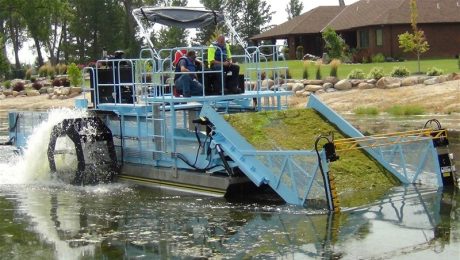
Fall has barely begun and the Lakes Area community is already preparing for next year’s battle against the invasive curlyleaf pondweed. The weed caused navigational issues on the lake this past season as it clogged boat motors and jammed dock lifts. The Iowa Department of Natural Resources, local government entities, area protective agency representatives and

The summer heat came early to the Tennessee Valley, upping the pressure for Dr. Brett Hartis, Tennessee Valley Authority aquatic plant management specialist, to get his job just right. He is charged with the task of monitoring and managing nuisance aquatic plants in the Tennessee River system. Over the roar of the airboat Hartis can
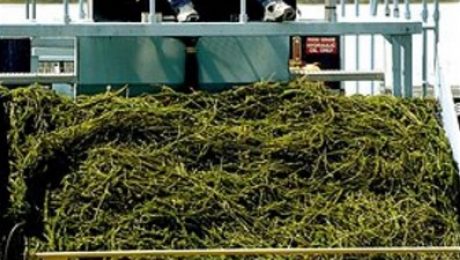
Center Lake and Clearwater Lake Association are trying to combat the starry stonewort with and aquatic weed harvester this summer. In an effort to use fewer chemicals in this Missouri lake, a weed harvester will be used on most of the lake to cut and remove the starry stonewort and the algae. Aquatic herbicides will

The Harvesters (weed cutters) are Yellow. They are cutting on Mondays, Tuesdays, Wednesdays and Thursdays. Typically “as a rule of thumb” the harvesters do not cut on Fridays. The Shore Barges (weed pick up – floaters and shorelines) are Orange. They are out every weekday, weather permitting, picking up floating weeds and weeds along the
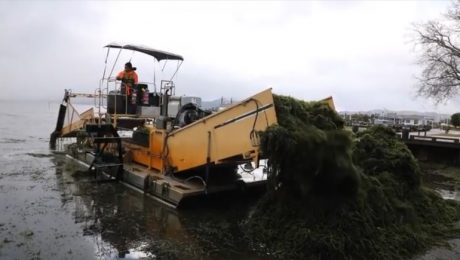
An aquatic harvester has been working at the Rotorua Lakefront in New Zealand, removing mammoth amounts of lake weed from the shore. The large influx washed up around Sulphur Point and Ohinemutu after strong winds and heavy rain battered the region. An influx like this was not uncommon as storm conditions could break off weed

Surrounded by some of the world’s richest soil and home to two major grain processing plants, Decatur has long been a hub for agribusiness in the United States. One major trade-off comes in the form of excess nutrients, specifically nitrogen and phosphorus, that runoff from fertilizers used on local farm fields and from discharges from

What is Harvesting? Operational Considerations for your lake. Expected Results from a Weed Harvesting Program. Most aquatic plant harvesting systems will cut and remove submersed plants to a depth of five or six feet. As this biomass is removed from the lake, the water is immediately ready for use and there are no restrictions on

Starry stonewort was first discovered in Minnesota waters in Lake Koronis in 2015. It’s now found in 19 Minnesota waterbodies. Lake Koronis is helping researchers understand how a changing climate may influence this invasive and how we can better manage it. Overall, the research showed year-to-year variability in the total biomass of starry stonewort. There

Lake managers might be hurting native aquatic plants – instead of helping them – when they use chemicals to control invasive plants on entire lakes. New research by Wisconsin DNR Lakes and River Team Leader Dr. Alison Mikulyuk shows native plant communities can struggle when chemicals are used to target invasive Eurasian watermilfoil. It appears
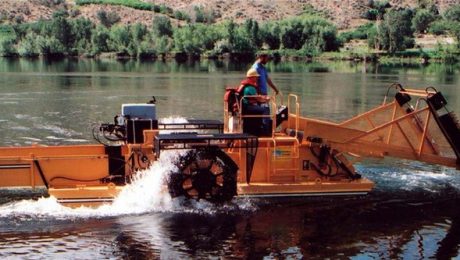
Kirksville City Council members voted to approve a resolution to allow weed harvest operations at Forest Lake in Thousand Hills State Park, Missouri, as the invasive curly leaf pond weed is not only negatively affecting recreation activities, but also impacts water quality and the drinking water treatment process. In 2018, the city entered into a