

A study by the Center for Limnology at UW-Madison says invasive species usually exist in low number and that overabundance is NOT the most common scenario. “Invasive species are often thought of as species that take over wherever they get in,” says Jake Vander Zanden, a UW limnology professor who directed the research. “But, in
One of the curses of local lake management — Eurasian milfoil — continues to defy expectations. At Monday’s Salem Town Board meeting, Supervisor Dennis Faber, who also is a commissioner of the Camp/Center Lakes Rehabilitation District in Wisconsin, said conventional wisdom going into this spring and summer was that the heavy snowfall of this year
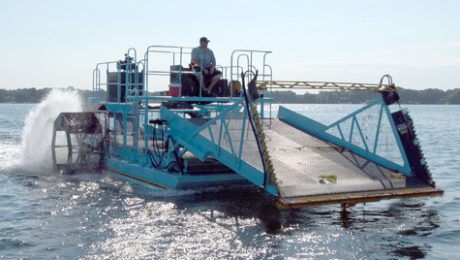
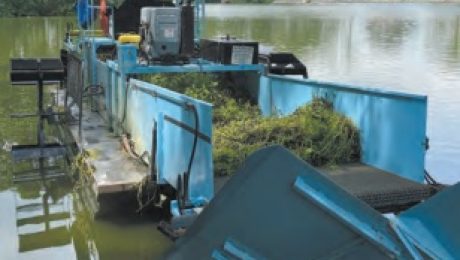
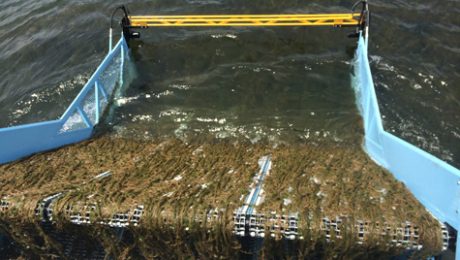
In Minneapolis, the park district’s mechanical harvester has been mowing Eurasian watermilfoil in the Chain of Lakes since before Memorial Day. It began several weeks earlier than usual, said Deb Pilger, director of environmental operations, due to the warm and early-starting spring that caused a healthy crop of invasive aquatic weed growth. The Lake Minnetonka
The Invasive Species War Boston Sunday Globe Sunday July 31st, 2011 The European water chestnut is considered an invasive species, one of the 1,500 or so plants and animals across the united States that have ended up settling in places where they don’t belong because of human activity. It’s a dubious distinction – one that

According to Nick Brown, DNR invasive species specialist, herbicides used to treat curly-leaf pondweed on Minnesota lakes may not lead to improvements in water quality. Curly-leaf pondweed is an invasive plant found throughout much of Minnesota. The plant grows slowly throughout the winter under the ice, but once the ice has left the lake the

The crew of the Lynyrd Skymmr rescued three canoeists and set a record in collecting 1,545 cubic yards of floating debris from Milwaukee, Wisconsin rivers this year. The 50-foot-long vessel scooped up three dozen tree trunks and uncounted branches along with the usual urban flotsam of plastic containers, trash, road construction safety barrels, tires and

Controlling nuisance plants in Dane County lakes is a key element in an updated plan being worked on by county officials. The Land and Water Resources Department tries to balance a reasonable use of the lakes through boating, fishing and swimming, while preserving the health and balance of the lake ecosystem. The use of mechanical
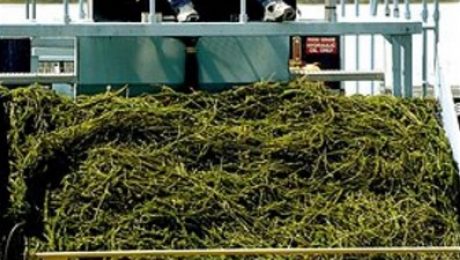
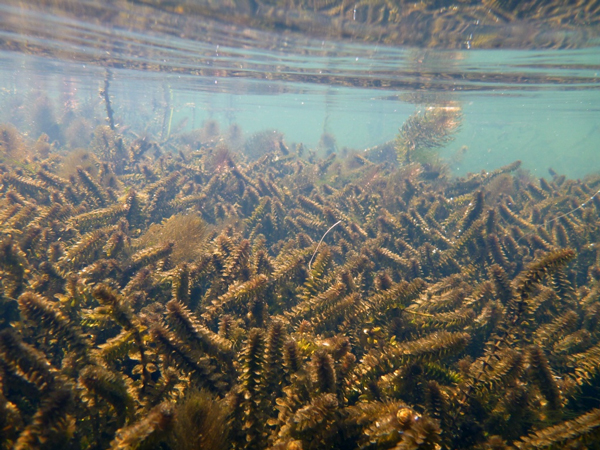
Eurasian water milfoil is an exotic invasive species that is thought to have been introduced to the U.S. in the 1800’s in the bilge of ships. Once established milfoil can never be completely eradicated, but it can be managed with an aquatic weed harvester or repeat treatments of aquatic herbicides. Any relaxing on the spraying
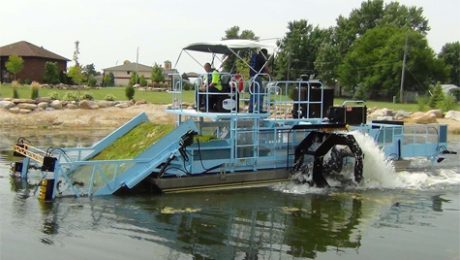
Once established, it can be managed but not eradicated. It has spread to almost every state in the US, where it grows into thick mats that can make lakes impenetrable for boats and swimmers. It can make it impossible for native plants to grow, affecting fish and wildlife. Yup, it’s Eurasian watermilfoil. Homeowners and businesses
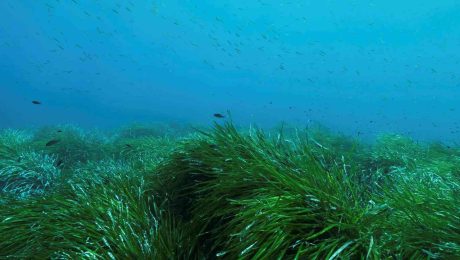
Submerged aquatic vegetation (SAV) such as wild celery and eelgrass are an important component of the Chesapeake Bay ecosystem. The underwater grasses improve water quality in the Bay by trapping loose sediment in their roots and remove pollutants, such as excess nitrogen, from the water column. The beds are also home to spawning fish and