


Lake Hallie Lake Association is making some headway in the war they’ve been waging against the hybrid watermilfoil weed. First discovered in Lake Hallie in 2005, watermilfoil is an invasive aquatic plant that has an aggressive tendency to form a thick mat-like layer as it floats on the water. If left unchecked, this plant can

The Massachusetts Department of Conservation and Recreation is aiming to reduce invasive plant species in Lake Whitehall in a plan that calls for herbicides and mechanical harvesting. The reservoir has extensive growth of “exotic nuisance aquatic vegetation,” including fanwort and variable-leaf milfoil, according to a report by ESS Group, a firmed hired by the state.
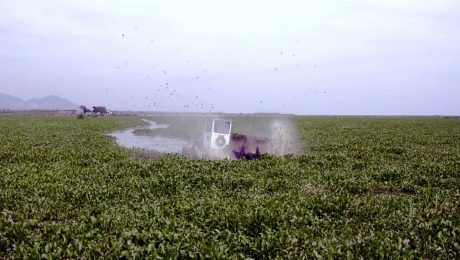
Aquarius Systems was featured on a National Geographic Cable Channel program broadcast in the United States on April 2nd and 5th, 2003. The Swamp Devil Aquatic Vegetation Cutter (formerly known as the Cookie Cutter) has been used on Lake Victoria since 1998 to help control dense mats of water hyacinth. A film crew from National
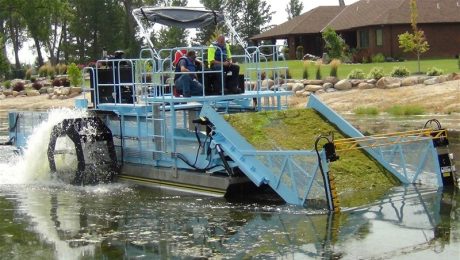
Fall has barely begun and the Lakes Area community is already preparing for next year’s battle against the invasive curlyleaf pondweed. The weed caused navigational issues on the lake this past season as it clogged boat motors and jammed dock lifts. The Iowa Department of Natural Resources, local government entities, area protective agency representatives and

An aquatic weed believed to be salvinia molesta, which grew only along the shoreline in January, has multiplied so fast it now covers the entire surface of the water at Lakewood residential community, Pemulwuy, Australia. The lake and its surrounds were home to an abundance of wildlife including ducks, pelicans and a pair of black
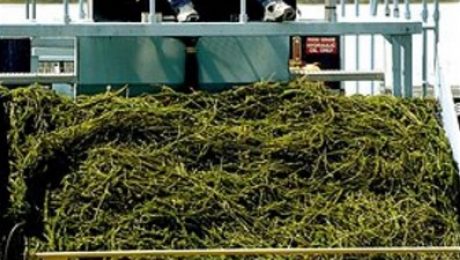
Center Lake and Clearwater Lake Association are trying to combat the starry stonewort with and aquatic weed harvester this summer. In an effort to use fewer chemicals in this Missouri lake, a weed harvester will be used on most of the lake to cut and remove the starry stonewort and the algae. Aquatic herbicides will
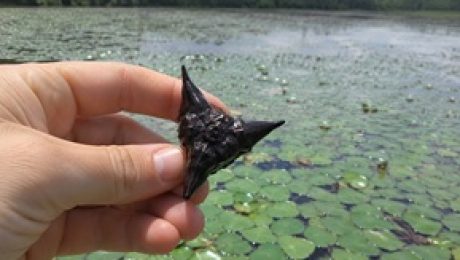
Trapa natans is native to Western Europe and Africa and northeast Asia, including eastern Russia, China, and southeast Asia to Indonesia. Trapa natans was first introduced to North America in the mid- to late-1870s, when it is known to have been introduced into the Cambridge botanical garden at Harvard University around 1877. A decade later

Lake managers might be hurting native aquatic plants – instead of helping them – when they use chemicals to control invasive plants on entire lakes. New research by Wisconsin DNR Lakes and River Team Leader Dr. Alison Mikulyuk shows native plant communities can struggle when chemicals are used to target invasive Eurasian watermilfoil. It appears
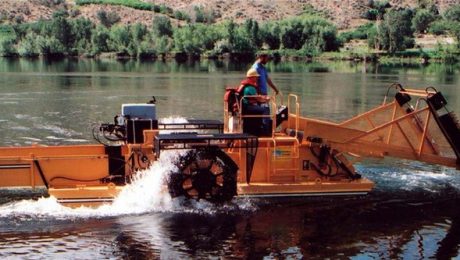
Kirksville City Council members voted to approve a resolution to allow weed harvest operations at Forest Lake in Thousand Hills State Park, Missouri, as the invasive curly leaf pond weed is not only negatively affecting recreation activities, but also impacts water quality and the drinking water treatment process. In 2018, the city entered into a
Spraying chemicals can be dangerous to the environment in many ways. But for Floridians, they can contribute to harmful algae blooms and damaging releases along the coast. There are other ways to remove invasive plant species that may not require chemical spraying. James Douglass, an environmental scientist at Florida Gulf Coast University says the other