
Lake & Waterway Management focuses on the practices and strategies that keep lakes, rivers, and wetlands healthy. Topics include lake health, ecosystem balance, climate change impacts, shoreline restoration, fish populations, and sustainable management techniques that protect water resources for the future.


In the 1970’s a group of private property owners dammed the Middle Raccoon River to form Lake Panorama. When the river rises, either due to heavy rain or snow melt not only does the excess water drain into the lake, but so does the debris the rushing waters carry. The debris mostly consists of organic

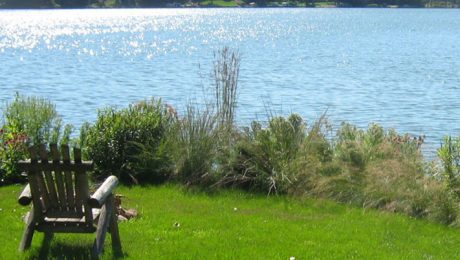
High water levels leading to eroding shorelines have been front-page news in recent months. Shoreline erosion is a concern for property owners with homes located on a Great Lakes or an inland lake. While we can’t control how Mother Nature effects our water levels there are steps that property owners can do to minimize shoreline
Probably the single most helpful thing we can all do to help keep surface waters clean is the addition of a native vegetative buffer along the lakeshore. Buffers help filter out and trap pollutants like fertilizers, herbicides and pet waste before they reach the water. In addition, the deep roots from native buffer plants help

What would a great ad for a university of technology be? An ad, that itself, solves a problem through technology. This is exactly what the University of Engineering and Technology of Peru and their ad agency have done. They created the first billboard in the world to make drinking water out of thin air and

Wild rice is an annual aquatic grass that produces seed that is a delicious and nutritious source of food for wildlife and people. Harvested in the early autumn, wild rice was an immensely important commodity to Native Americans, particularly the Ojibwe and Menominee, who lived in the areas where it grew abundantly. The Menominee even
Yosemite Valley is a glacial valley in the Sierra Nevada, part of the Yosemite National Park, drawing close to 3.7 million visitors annually. The Hetch Hetchy Valley is virtually an identical twin to Yosemite Valley, but you will never see its stunning rock formations and dramatic waterfalls. With steep valley walls, a narrow outlet and

Each fall, elementary school students gather along the Milwaukee River to release fingerling lake sturgeon—an act that symbolizes just how far the river has come. Once written off as polluted and lifeless, the Milwaukee River now supports more than 30 native fish species and has become a model of urban river recovery. Decades of environmental

Located about six miles northwest of East Troy, Wisconsin; sits a small 95 acre lake surrounded by high quality wetlands and rich marshes. In terms of ecological importance, Lulu Lake ranks high on the list of Wisconsin’s lakes. The lake and its watershed comprise one of Wisconsin’s highest quality natural areas. Prior to electric refrigeration,

Unlike using chemicals, or doing nothing at all, the advantages of harvesting include: – Immediate relief from nuisance plants that interfere with navigation and recreation – Immediate use of the water for swimming or irrigation – There is nothing foreign introduced to the environment when using mechanical control – Biomass is removed from the water
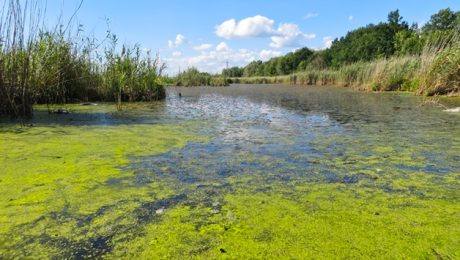
In December, 2010 Wisconsin became the first state in the country to adopt phosphorus water quality standards for lakes, reservoirs, rivers, and streams. The Environmental Protection Agency has approved Wisconsin’s revised rule as a revision to Wisconsin’s federally-approved National Pollutant Discharge Elimination System program under the Clean Water Act. Under the new rules DNR determines