

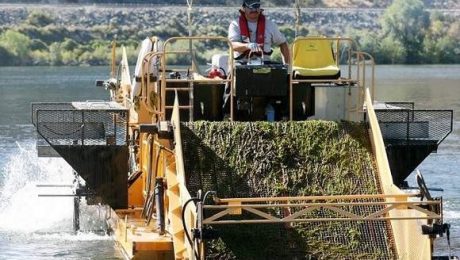
In the absence of chemical pesticide treatment on Cazenovia Lake in New York this summer, crews used an aquatic weed harvester to control the invasive watermilfoil. During the four months of weed harvesting on the lake, town crews removed 354 boatloads — 2,656 tons — of invasive milfoil weeds from the lake. The harvesting also

What is Harvesting? Operational Considerations for your lake. Expected Results from a Weed Harvesting Program. Most aquatic plant harvesting systems will cut and remove submersed plants to a depth of five or six feet. As this biomass is removed from the lake, the water is immediately ready for use and there are no restrictions on

It’s a familiar sight to residents living on the shores of Kitsap Lake in Washington: each summer, around the beginning of June, a bright green algae begins to creep across the water. These blooms can be harmful to people and pets and have forced closures of Kitsap Lake and its beaches every year for the
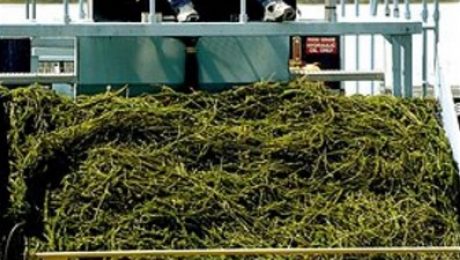
Spraying chemicals can be dangerous to the environment in many ways. But for Floridians, they can contribute to harmful algae blooms and damaging releases along the coast. There are other ways to remove invasive plant species that may not require chemical spraying. James Douglass, an environmental scientist at Florida Gulf Coast University says the other
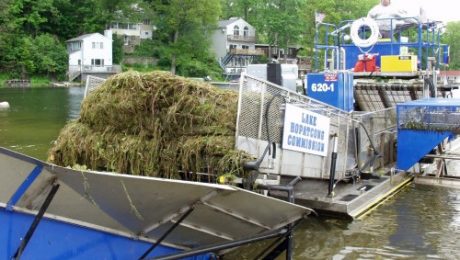
Benefits of Weed Harvesting Dr. Stephen J. Souza Lake Hopatcong Commission Environmental Consultant One of the most obvious management activities of the Lake Hopatcong Commission is the weed harvesting program. Some may view this as a simple “mowing” of the Lake. However, much more is accomplished than simply opening boating lanes and improving swimming. The
Intensive in-lake and watershed management caused Kohlman Lake, the northernmost lake in the Phalen Chain of Lakes in Minnesota, to go from a relatively turbid to a clear water state. Aquatic plants responded to the clean waters by growing up to the surface. The change in lake state and a comprehensive water quality monitoring dataset

An aquatic weed harvester was used to remove macroalgae from Georgica Pond in New York from 2016 through 2018 and on a limited basis last year, an effort to inhibit harmful algal blooms, including toxic cyanobacteria, or blue-green algae. Approval has just been granted for the the mechanical harvester to be operated from June to

In the last few decades, the lake’s weedy, northern-most portion has clogged hulls and deterred boaters from entering the lake from the Oswegatchie River. Patches of weeds greet the water’s surface near every dock, and nearly invisible from a distance on a windy day, matted greenery creates a basin of weeds seven-feet-deep in some spots.

Unlike using chemicals, or doing nothing at all, the advantages of harvesting include: – Immediate relief from nuisance plants that interfere with navigation and recreation – Immediate use of the water for swimming or irrigation – There is nothing foreign introduced to the environment when using mechanical control – Biomass is removed from the water