

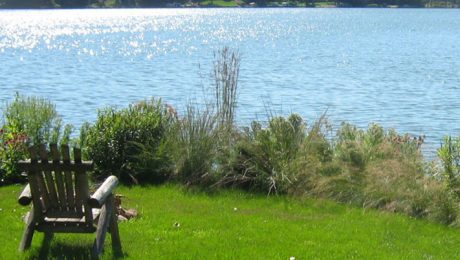
High water levels leading to eroding shorelines have been front-page news in recent months. Shoreline erosion is a concern for property owners with homes located on a Great Lakes or an inland lake. While we can’t control how Mother Nature effects our water levels there are steps that property owners can do to minimize shoreline


We have all done it: a greasy pizza box, a disposable coffee cup, the odd plastic bag. Sometimes, we want things to be recyclable, so we put them in the recycling bin. Waste managers often call this wishful or aspirational recycling. But, unfortunately, putting these objects in with the rest of the recycling can do

A monumental eco-challenge facing the planet is plastic marine debris. The modern economy has produced more than eight billion metric tons of newly manufactured plastic, but 75% of it becomes plastic waste. It is estimated that approximately five trillion pieces of plastic, or roughly 250,000 metric tons, have littered the waters. So, what can be

A recent study of bottled water, conducted by the journalism organization Orb Media, found that almost every major brand of bottled water is contaminated with particles of plastic. The researchers tested 250 bottles of water—from nine countries and 11 brands. They dropped a red dye in each, which stuck to the plastic and glowed when

Phosphorus is one of the most important components in the ongoing struggle to balance agricultural prosperity with water quality. When farmers fertilize their fields with this essential nutrient, plants use some, with precipitation carrying excess amounts into nearby bodies of water, fueling algal blooms that can kill fish and and endanger drinking water quality. But
Aquatic plants, whether invasive or native, can be described as either a mess or a resource. Natural plant growth covers 20 – 40% of the water and includes a diversity of plants. However, invasive plants such as Eurasian watermilfoil, hydrilla and water hyacinth quickly take over a lake covering 60% and sometimes 100% of the

Portland’s first snowstorm of the winter storm season hit mid-day prompting thousands of people to head home early. Unfortunately, roadways were clogged for hours leaving many to abandon their cars. Cautious motorists decided to stay home from work when the second snowstorm that left roadways icy for days. Portland is now looking at adding road

The Environmental Protection Agency reports that 40% of the nation’s waterways suffer water quality problems. Water systems are often interlinked and the dangers of runoff from agriculture, forestry, construction and people’s personal yards are numerous. Did you know that a typical city block generates more than five times as much rainwater runoff as a forested

An estimated 9 to 10 percent of Wisconsin wells have tested over safe limits for nitrate. Studies have estimated that 90% of nitrate in groundwater comes from spreading of synthetic fertilizers and dairy manure on farm fields, with most of the remainder from septic systems. Nitrate behaves differently. Relatively little lingers near roots where it
