

Eurasian Watermilfoil, Indian Lakes Watershed, Definition of “US Waters”, Importance of Restoring your Shoreline Indian Lake Watershed Project Received New Weed Harvester Aquatic Invasive Species: Eurasian Watermilfoil Definition of “Waters of U.S.” The Importance of Restoring Your Shoreline Read More

A new study by the Wisconsin Department of Natural Resources has shown that ongoing efforts to prevent the spread of aquatic invasive species have been successful. The spread of aquatic invasive species has remained stable in the 1,000 Wisconsin lakes used in the study. Invasive species are still present in 75% of the lakes, but
The Minnesota Department of Natural Resources is conducting an immediate response to the capture of 51 invasive carp on the Mississippi River. The invasive carp were caught by two commercial fishing operators near La Crosse and Trempealeau, Wisconsin, during routine spring netting in March. When the commercial fishing operator operating near La Crosse saw what

In August of 2018 starry stonewort, an aquatic invasive species was found in a lagoon of Geneva Lake and within a year it was found in Geneva Lake. Initially it was hoped that the isolated population in the lagoon could be eradicated by dredging before it got into the lake, but the attempts failed and
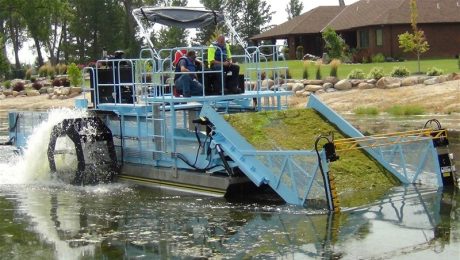
The Cazenovia Town Board’s first meeting of the new year — and with recently elected Councilor Jimmy Golub seated at the table — saw not only the making of annual organizational appointments for the town government, but also the announcement that the town is soliciting bids to potentially purchase a brand new lake weed harvester
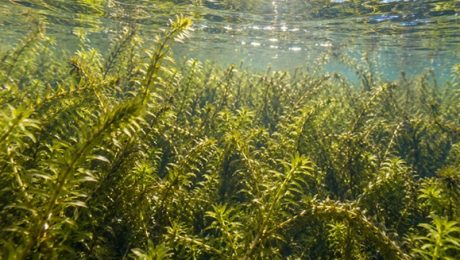
Elodea is a plant commonly found in aquariums that, if released in the wild, will dominate certain lake or river habitats, choking out native vegetation and altering the food web at all levels. It increases sedimentation rate, allowing more sediment to settle out of the water. And it can decrease the dissolved oxygen concentration in
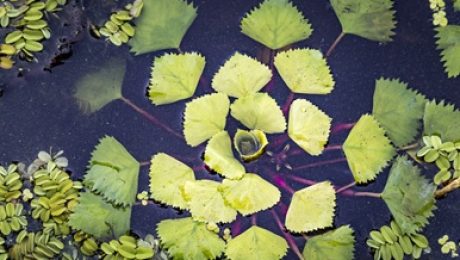
The Charles River Watershed Association and local citizens have obtained funding to conduct large-scale mechanical harvesting to remove roughly 50 acres of water chestnut and other invasive weeds. The Charles River Lakes District in Massachusetts is a popular destination for canoeists, kayakers and rowers, but the pollution from stormwater runoff resulted in an increase in
Lake Hallie Lake Association is making some headway in the war they’ve been waging against the hybrid watermilfoil weed. First discovered in Lake Hallie in 2005, watermilfoil is an invasive aquatic plant that has an aggressive tendency to form a thick mat-like layer as it floats on the water. If left unchecked, this plant can